News & Updates

List of news articles

Showing 61 - 80 out of 186 results for 59

  • Convening Highlights the Role of Judges and Lawyers in Improving Motions Practice

    While a significant focus of civil justice reform has been on the cost and delay of discovery, IAALS has heard the call for reform in the area of motions practice as well, which can similarly result in great cost and delay to the parties. In response, IAALS hosted a convening earlier this month at the Penrose House in Colorado Springs, Colorado, devoted to addressing the current challenges in dispositive motions practice.

    1
  • Denver to Host Jury Improvement Luncheon

    The Civil Jury Project at NYU School of Law, whose Executive Director is Steve Susman, is organizing a Jury Improvement Lunch for the Colorado bench and bar this Thursday, November 2. The goal of the lunch is to honor jurors who have recently served by inviting them to attend a lunch with judges and lawyers in the community to share their experiences and to learn from them about what can be done to improve civil trials. These education programs, dubbed “Jury Improvement Lunches,” began in Texas and have been held in Houston, Dallas, and Corpus Christi. In addition to Denver, the project is now organizing similar lunches in Boston, Baltimore, San Francisco, Kansas City, Seattle, Oklahoma City, and Cleveland.


    1
  • Arizona Supreme Court Approves Civil Justice Reforms

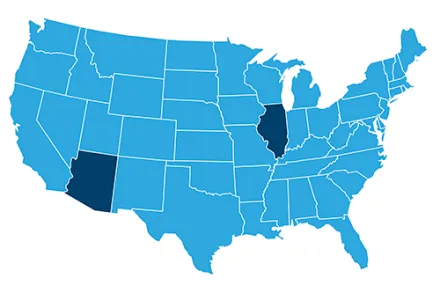
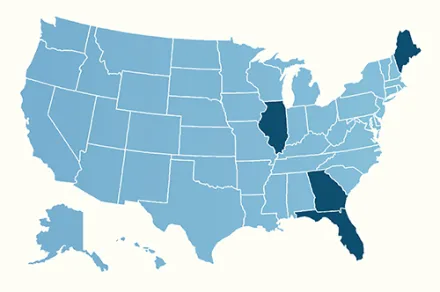
    Arizona’s Supreme Court has approved numerous civil justice reforms “aimed at reducing the time and expense it takes to resolve civil cases in Arizona’s superior courts.” The reforms are based on the recommendations of Arizona’s Civil Justice Reform Committee, which was established by the Arizona Supreme Court in December 2015 to “develop recommendations, including rule amendments or pilot projects, to reduce the cost and time required to resolve civil cases in Arizona’s superior courts.”

    1
  • States Get New Tools to Help the Civil Justice System Reform Process

    Across the nation, states are reforming the civil justice system. They are taking action in response to the Conference of Chief Justices' (CCJ) and Conference of State Court Administrators' (COSCA) endorsement of 13 recommendations focused on ensuring our courts are affordable, efficient, and fair for all. States are creating civil justice reform task forces and committees focused on improving the delivery of civil justice in their own states. To aid that process, IAALS and the National Center for State Courts (NCSC) have rolled out several new tools as part of a three-year Implementation Plan to provide states with education and technical assistance. This month we released two new tools.

    1
  • Strong Support for Civil Justice Reform

    A recent study conducted for Voices for Civil Justice, with support from the Public Welfare Foundation, found that voters strongly favor reform of the civil justice system. Overwhelming majorities of voters believe it is important to “ensure that everyone has access to the civil justice system” and “strongly support a wide range of services to enhance access.” Moreover, voters support increasing state funding to build a more accessible civil justice system. The survey highlights that equal justice under the law in our society is fundamental, with voters considering it a right, not a privilege.

    1
  • ABA Adopts Resolution Supporting Trial Experience for Young Lawyers

    At its annual meeting this week in New York City, the ABA House of Delegates adopted Resolution 116 urging courts to implement plans that provide meaningful courtroom experience to new lawyers. The resolution—recognizing the important role law firms and clients play in the experience, or lackthereof, that young lawyers receive—also urges law firms and clients to take advantage of those plans.

  • Civil Rules Advisory Subcommittee Requests Comment on Rule 30(b)(6) Experiences

    Last year the Civil Rules Advisory Committee took up the topic of Rule 30(b)(6) depositions following the submittal of a letter by members of the Council and Federal Practice Task Force of the ABA Section of Litigation, in their individual capacities. Unlike individual depositions, Rule 30(b)(6) depositions are noticed to an organization such as a corporation or government agency, and include a description of the matters for examination. The company must identify and prepare the witness to testify about information known or reasonably available to the organization. The rule was initially adopted to curb the practice of “bandying” where organizations produced one witness after another, with each disclaiming knowledge. In their request for a review of current practices under the Rule, the ABA members highlighted confusion about the Rule’s requirements, as well as instances where the courts have divided on how to interpret those requirements.

  • Two Federal District Courts Launch Initial Discovery Pilot Projects

    This month the Northern District of Illinois launched a three-year pilot project, known as the Mandatory Initial Discovery Pilot Project (MIDP). The pilot project requires robust mandatory initial discovery with the goal of reducing cost and delay in civil litigation. Through a General Order, the court has ordered that the MIDP program be implemented in all civil cases filed on or after June 1, 2017, except as to those categories of cases that are exempted under the MIDP Standing Order.

    1
  • Not to be Overshadowed by Discovery: The Cost and Delay of Motions

    The last ten years has seen an intense and almost singular focus on discovery. E-discovery has been a big reason for this, given its impact on the entire discovery process from identification to production. Nevertheless, there is another important aspect to the pretrial system that also results in great cost and delay—motions.

    1
  • Recommendations Turn Into Action on the Ground

    In July 2016, the Conference of Chief Justices and the Conference of State Court Administrators recognized the important needs of litigants in our state courts and responded by adopting a set of 13 Recommendations focused on ensuring our courts are affordable, efficient, and fair for all.

    1
  • A Well-Deserved Recognition for Our Judges

    Last year, U.S. Supreme Court Chief Justice Roberts dedicated his 2015 year-end report on the State of the Judiciary to extolling the new amendments to the Federal Rules of Civil Procedure. He noted the amendments serve as an important stride forward…

  • Expert Opinion

    The 2015 Federal Rule Amendments—One Year Later

    One year ago today, the long awaited amendments to the Federal Rules of Civil Procedure went into effect. The “package” of amendments included changes across a number of rules and focused on increasing cooperation, achieving proportionality in discovery, and encouraging early case management by judges. A new Rule 37(e) was added addressing sanctions for the failure to preserve electronically stored information.

    1
  • Education and Assistance Available to Support State Civil Justice Reform

    In July, the Conference of Chief Justices Civil Justices approved a resolution endorsing the Recommendations of its Civil Justice Improvements Committee. The Committee’s report, Call to Action: Achieving Justice for All, issues a call to action to the state courts to improve our civil justice system—and a strategic response in the form of thirteen recommendations for restoring function and faith in our civil justice system.

    1
  • Arizona’s Call to Reform

    Arizona has long been a leader in civil justice reform, and last week Arizona led the way again with a set of recommendations from its Committee on Civil Justice Reform. The Committee was established by the Arizona Supreme Court in December 2015 to “develop recommendations, including rule amendments or pilot projects, to reduce the cost and time required to resolve civil cases in Arizona’s superior courts.”

    1
  • Expert Opinion

    Significant Efforts To Implement Proportionality in Discovery Continue

    When significant amendments to the Federal Rules of Civil Procedure went into effect last December, we celebrated this important achievement but also stressed that how the rules were implemented would be key to seeing a positive impact. The importance of how the amendments are being implemented has not been lost on the bench and bar. In fact, it has been the focus of 2016.

    1