News & Updates

List of news articles

Showing 221 - 240 out of 488 results for Civil justice reform

  • IAALS Talks Modernizing State Courts in Metropolitan Corporate Counsel

    In a recent article for Metropolitan Corporate Counsel, IAALS Executive Director Rebecca Love Kourlis and Rule One Initiative Director Brittany Kauffman discuss how state court and bar leaders across the country are gearing up for major civil justice reforms using the recently released Roadmap for Implementation. The Conference of Chief Justices (CCJ) and the Conference of the State Court Administrators (COSCA) have 13 recommendations for improvements that the Roadmap guides toward implementation, in an effort to ensure that the legal system is serving those who need it.

    1
  • Jurors’ Public Social Media Profiles Are Fair Game for Trial Research

    In a time when nearly everyone has an online presence, more and more jurisdictions are having to navigate the extent to which trial lawyers can use a juror's social media to inform jury selection. In 2014, the American Bar Association's Standing Committee on Ethics and Professional Responsibility released Formal Opinion 466 on this topic. The Committee said that lawyers can review a juror or potential juror’s internet presence before or during a trial so long as they do not communicate with or request access from those jurors.

    1
  • Expert Opinion

    The Unintended Consequences of Waning Court Filings

    Last month, in "We Won’t See You in Court: The Era of Tort Lawsuits Is Waning," the Wall Street Journal took a look at the decline in tort lawsuit filings and the reasons fueling the decline, citing “state restrictions on litigation, the increasing cost of bringing suits, improved auto safety, and a long campaign by businesses to turn public opinion against plaintiffs and their lawyers.” At first blush, this may seem like good news: lawsuits are down, people are suing less! However, I caution that it is far from good news and, if this trend continues, the courts may be in danger of becoming irrelevant.

    1
  • Backlog of Immigration Cases Leads to Calls to Make Those Courts Independent of DOJ

    ​As noted by the Miami Herald, the average lifespan of an immigration case in the United States is about three years. Several factors have led to the nation-wide backlog, but many say the most prominent reason is the national shortage of federal immigration judges. According to a recent report by the Government Accountability Office, the backlog of immigration cases nearly doubled between 2009 and 2015 due to the shortage of judges. The average caseload for each judge is approximately 2,000 cases and some immigration courts are so backed up that they’re already scheduling cases for the year 2020.

    1
  • Envisioning a Civil Court System that Provides Justice for All

    Faced with rising numbers of people in poverty, funding deficiencies, and an increase in self-represented litigants in state courts, the Conference of Chief Justices and the Conference of State Court Administrators unanimously passed Resolution 5, in July 2015, to address these issues directly and to reaffirm their commitment to meaningful justice for all.

  • Civil Rules Advisory Subcommittee Requests Comment on Rule 30(b)(6) Experiences

    Last year the Civil Rules Advisory Committee took up the topic of Rule 30(b)(6) depositions following the submittal of a letter by members of the Council and Federal Practice Task Force of the ABA Section of Litigation, in their individual capacities. Unlike individual depositions, Rule 30(b)(6) depositions are noticed to an organization such as a corporation or government agency, and include a description of the matters for examination. The company must identify and prepare the witness to testify about information known or reasonably available to the organization. The rule was initially adopted to curb the practice of “bandying” where organizations produced one witness after another, with each disclaiming knowledge. In their request for a review of current practices under the Rule, the ABA members highlighted confusion about the Rule’s requirements, as well as instances where the courts have divided on how to interpret those requirements.

  • Expert Opinion

    Australia Could Teach America a Thing or Two about Legal Reform

    I spent two weeks in Australia in May, meeting Australian judges, lawyers, law professors, deans, and legal service providers. I spoke at a conference dedicated to examining the role of empirical data in legal system reform, visited two Family Relationship Centres, and horrified a group of Australian judges by detailing how judges are elected in partisan elections in some states in the United States. The whole experience confirmed my notion that Australia is leading the way in legal system reform.

    1
  • IAALS is Growing with Addition of Three New Staff Members

    IAALS is expanding: both in terms of our capacity for impact and in the literal expansion of our ranks. Specifically, we are delighted to announce that Managers Nathaniel Baca and Zack DeMeola and Research Assistant James Swearingen joined our organization in June. Already, they are broadening and deepening our work.

    1
  • Two Federal District Courts Launch Initial Discovery Pilot Projects

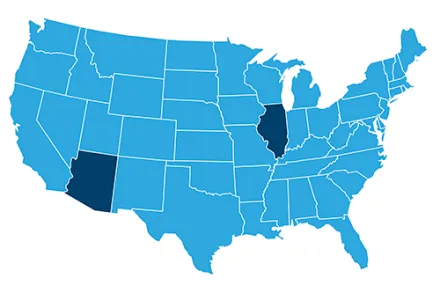
    This month the Northern District of Illinois launched a three-year pilot project, known as the Mandatory Initial Discovery Pilot Project (MIDP). The pilot project requires robust mandatory initial discovery with the goal of reducing cost and delay in civil litigation. Through a General Order, the court has ordered that the MIDP program be implemented in all civil cases filed on or after June 1, 2017, except as to those categories of cases that are exempted under the MIDP Standing Order.

    1
  • Civil Justice Roadmap for State Innovation Gaining Momentum and Participation

    In an article published earlier this month, Law Week Colorado covered the new roadmap for civil justice reform developed by IAALS and the National Center for State Courts (NCSC). The two organizations announced their "Roadmap for Implementation" in May, on the heels of the Conference of Chief Justice (CCJ)'s recommendations for increasing efficiency and effectiveness. IAALS will work with five jurisdictions to implement and test the roadmap, and IAALS and NCSC will provide guidance and support along the way, as they have throughout the CCJ Civil Justice Improvements project process.

    1
  • Press Release

    IAALS Announces Court Compass Project to Benefit Self-Represented Litigants

    In three quarters of all civil cases, at least one party is going to court without an attorney and navigating a legal system not designed for the layperson’s use. To help potential litigants, some courts are leveraging technology and developing websites and portals that offer a vast amount of information and resources. However, these offerings vary widely in courthouses across the country. With the goal of helping bridge what has become an access-to-justice gap, IAALS today announced the release of Court Compass: Mapping the Future of User Access Through Technology, a compendium and analysis of court-offered solutions for self-represented litigants (SRLs), along with maturity models to guide the development of integrated solutions in courts nationwide.

    1
  • Press Release

    Efforts to Transform America's Civil Justice System Hit the Ground Running

    The effort to create a 21st Century system of justice is advancing. Today, IAALS, the Institute for the Advancement of the American Legal System, and the National Center for State Courts (NCSC) announced the release of a new Roadmap to guide states as they implement sweeping changes to make state courts more efficient and effective—and that five jurisdictions will serve as demonstration pilots as they follow the roadmap and implement civil justice reform. An additional three states have also received grants to support their efforts to have also been selected as demonstration pilots around the country as they work to reduce cost and delay in the legal system. These efforts are part of three-year $1 million strategic response to the call to action sounded by the Conference of Chief Justices, and supported by the State Justice Institute.

    1
  • Expert Opinion

    Rule of Law Under Attack: Ideas for Building Trusted Courts

    The Rule of Law is absolutely under attack in the United States of America—from elected officials, state legislative bodies, and groups of individuals. The attacks are apparent in politicians’ tirades, legislative proposals that would limit the authority of courts, and assaults on established principles of law such as federal versus state authority. But, the solution is not to put sandbags along the perimeters and bemoan the idiocy of some people.

    1
  • Expert Opinion

    The Legal Marketplace is Changing and Innovating

    Consumer demand and innovations in the legal marketplace, especially technological advances, are leading the charge for changes in the legal profession. Many legal educators, lawyers, court administrators, and judges are embracing the evolution, but others are still reluctant to disrupt the status quo.

    1
  • Access to Legal Services for Low Income People on President’s List of Cuts

    On the front of the United States Supreme Court building in Washington, D.C., is the proclamation “Equal Justice Under Law.” However, according to our Cases Without Counsel study, in some jurisdictions nearly 80 percent of people with a court case end up representing themselves. For many, not being able to afford a lawyer is the main reason for the wide justice gap.

  • Annual Report

    The Stage is Set: IAALS 2016 Annual Report

    I am so proud to present to you our 2016 Annual Report, capturing a remarkable year in our existence and representing the work of our truly visionary staff. Last year we celebrated our tenth-year anniversary. As we embark upon the next ten, in this report we embrace the theme: The Stage is Set: Lights, Camera, Innovation. Throughout the report, you will find not only evidence of what we have accomplished, but also the ways in which we are setting the stage for continuing and fundamental change. You will also find quotes from Nobel Prize-winning bards, Tony Award-winning lyricists, and favorite authors—that inspire the creative in each of us. 

    1
  • Not to be Overshadowed by Discovery: The Cost and Delay of Motions

    The last ten years has seen an intense and almost singular focus on discovery. E-discovery has been a big reason for this, given its impact on the entire discovery process from identification to production. Nevertheless, there is another important aspect to the pretrial system that also results in great cost and delay—motions.

    1