News & Updates

List of news articles

Showing 61 - 80 out of 404 results for Judicial selection

  • Expert Opinion

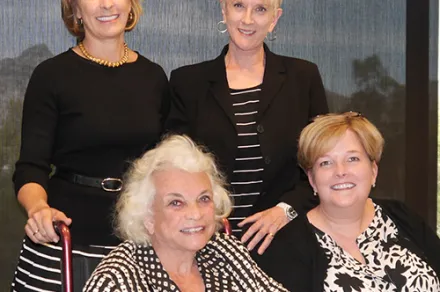
    IAALS and Justice O’Connor: How Governors Should Fill Interim Court Vacancies

    he Quality Judges Initiative at IAALS, along with Justice Sandra Day O’Connor and other members of our advisory committee, has been reaching out to governors of these states to urge them to use nominating commissions when filling court openings that occur between scheduled elections. These vacancy nominating commissions invite applications for open positions, screen and interview the candidates who apply, and recommend a short list of the best qualified to the governor for appointment.

    1
  • State Lawmakers Endeavor to Sway Supreme Court Decisions

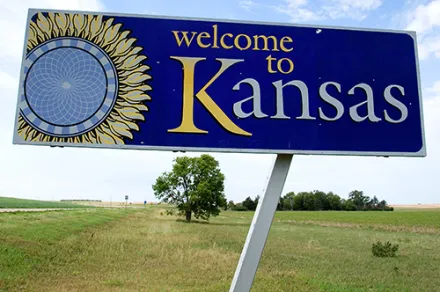
    In the last few weeks, legislators in two states have passed laws aimed at influencing upcoming supreme court decisions. In Kansas, trouble has brewed between the judiciary and the other two branches, stemming largely from state court decisions ordering the legislature to spend more on public education. Meanwhile, the Republican majority in the North Carolina legislature has instituted retention elections, in place of contested elections, for supreme court justices seeking additional terms.

    1
  • Pennsylvania Sees Record-Breaking Supreme Court Primary

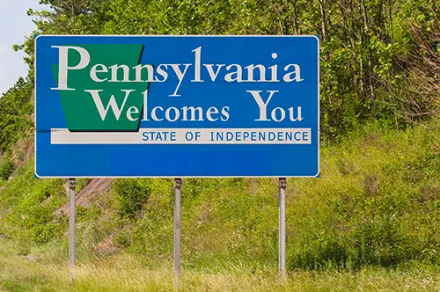
    With three of the seven seats on the Pennsylvania Supreme Court up for election in November, the stakes were high in the May 19 primaries. The twelve candidates raised more than $5 million and spent approximately half of that on TV ads. The ads tended to focus on the need to restore the high court’s integrity, in light of the fact that two of the vacancies were created by resignations in the face of scandal.

    1
  • West Virginia Ends Partisan Elections for Judges

    The West Virginia legislature has passed, and the governor has signed, a bill that makes elections for the state's judges nonpartisan. Despite the new legislation, it is not possible to remove all traces of partisanship from judicial races. An additional consequence of the new law is that it effectively ends straight-ticket voting for judges.

  • Former Alabama Chief Justice Shares Firsthand Perspective on Judicial Elections and Impartial Courts

    In a recent Politico piece, the former chief justice of Alabama's supreme court offered a firsthand perspective on the relationship between electing judges and maintaining impartial courts and judges, and other judges have shared similar sentiments. In 2012, Chief Justice Cobb participated in an IAALS roundtable, which reached consensus on several "cornerstones" for contested judicial elections.

  • O'Connor Advisory Committee Member Cited in Support of Impartial Kansas Courts

    As has become standard operating procedure in the last several sessions, the Kansas legislature is once again considering proposals to alter the process for selecting the state's appellate judges. Chief Justice Lawton Nuss has spoken out against efforts to end Kansas' merit selection process for appellate judges and has found an ally in O'Connor Advisory Committee member and former Chief Justice of Texas Wallace Jefferson.

  • John Oliver's Humorous Take on a Serious Issue

    Social and mainstream media is abuzz with coverage of a recent segment on HBO's Last Week Tonight with John Oliver, in which Oliver skewers judicial elections. With clips of campaign ads that range from the absurd to the appalling, and extreme examples of the tactics some judicial candidates have used to garner campaign contributions, Oliver shines a hilarious but no less accurate light on the "horrifying spectacle" of judicial elections.

  • Expert Opinion

    Williams-Yulee v. Florida Bar: Is Justice for Sale on the Campaign Trail?

    Last Tuesday’s Supreme Court argument was the latest chapter in the Court’s struggle to balance electoral candidates’ right to solicit campaign donations against the appearance or actual threat of corruption that arises when litigants or attorneys donate to a judge’s election campaign and later appear before that same judge in court. What all the Justices seemed to agree about—that electing state court judges poses great risk to the legitimacy of the states’ judiciaries—remains beyond their power to remedy.

  • President Obama Reaches Milestones in Naming Judges in 2014

    According to data presented by Russell Wheeler of the Brookings Institution, President Obama has seen a higher judicial confirmation rate (92 percent) after six years in office than did President George W. Bush (84 percent) and President Clinton (89 percent) at this point in their terms. President Obama is also making his mark on the federal courts in terms of diversity. The 305 Obama-nominated judges are the most diverse group ever.

  • Malia Reddick on Maintaining Confidence in Delaware's Judicial Nominating Commission System

    Delaware Law Weekly recently published an article discussing how judicial vacancies are filled in Delaware. Specifically, the article focused on the state’s Judicial Nominating Commission (JNC) and whether it is appropriate for members of the JNC to resign and then apply for judicial positions. IAALS's own Malia Reddick spoke to the problems created by a process where this is allowed.

  • New Study: Partisan Judicial Elections Lead to Poorer Quality Courts

    According to a recent study, Alabama should move from partisan elections of judges to commission-based gubernatorial appointment in order to ensure a stable, predictable, and fair legal system for businesses and promote long-term economic growth. The study explores the correlation between states' methods for selecting judges and how attorneys perceive judges' competence and impartiality, as well as other aspects of states' legal environments.

  • The Docket: How Should We Select Our Judges?

    A recent article in the Denver Bar Association’s The Docket reviewed the dilemma that surrounds how states select and retain judges. In the article, Colorado's merit selection system is highlighted as a nationally recognized model for ensuring a judiciary that is free from politics, while also affording citizen input. Colorado's process for choosing judges mirrors the four-part O'Connor Plan, IAALS' collaboration with Justice Sandra Day O'Connor.

  • New Study Shows Election Ads Influence Judicial Decisions in Criminal Cases

    A new study from the American Constitution Society finds a correlation between the airing of TV ads in state supreme court races and justices' decisions in criminal cases. According to the study, the more ads that air in a state, the more likely justices on the state's high court are to vote against criminal defendants. The study also documents the effects of the U.S. Supreme Court's 2010 decision in Citizens United v. Federal Election Commission.

  • #KnowYourJudge: States Around the Country Offer Information About Judges on November Ballot

    Public opinion polls consistently show that voters know very little about judges and judicial candidates on the ballot and wish they had more information. Around the country, judicial branch entities, state bar associations, and other groups are working to change that. In the November judicial elections, voters in many states will have the benefit of objective assessments of the performance of incumbent judges, and in some instances, the qualifications of their challengers.

  • A Look at Judicial Nominating Commissions—The Key to Selecting High-Quality Judges

    Earlier this month, Law Week Colorado published an article highlighting IAALS' report Choosing Judges: Judicial Nominating Commissions and the Selection of Supreme Court Justices. An outgrowth of the O’Connor Judicial Selection Plan, the report examines why judicial nominating commissions are established in the first place, how their structure and operation differ across the nation, and what some of the best practices might be in building public trust in the process.

  • Attention in Tennessee—and Around the Country—Turns to Court-Related Ballot Measures

    On August 7, three Tennessee Supreme Court justices withstood a well-funded challenge to their retention on the bench for subsequent terms. Tennesseans are now looking ahead to November 4, when voters will decide whether to adopt a modified federal selection process for the state's appellate judges. Voters in four other states will also weigh in on proposed constitutional amendments affecting judicial selection and tenure.

  • Expert Opinion

    Choosing Judges: Judicial Nominating Commissions and the Selection of Supreme Court Justices

    We are pleased to announce the release of a new report on the judicial nominating commissions used to select supreme court justices in 30 states and Washington, D.C. With Choosing Judges, we examine why judicial nominating commissions are established in the first place, how their structure and operation differ across the nation, and what some of the best practices might be in building public trust in the process.

    1