News & Updates

List of news articles

Showing 181 - 200 out of 822 results for Judiciary

  • Expert Opinion

    Missouri Plan Celebrates 75 Years

    November 2015 is the 75th anniversary of the Missouri Plan, an innovative approach to selecting state judges intended to preserve their impartiality while holding them publicly accountable for their performance on the bench. First adopted by Missouri voters in 1940, this process is now used to select at least some judges in two-thirds of the states.

    1
  • Recapturing Confidence in the Judiciary

    Do you trust the judiciary? If you thought “yes,” then you may be in a shrinking crowd. Judge Kevin S. Burke, Hennepin County district judge and IAALS board member, begins a recent article with candor – Public trust in the courts has dropped to an…

  • New Ohio Website Seeks to Educate Judicial Voters

    With the leadership of Chief Justice Maureen O’Connor, a coalition of groups in Ohio has launched a new website—Judicial Votes Count—to better educate voters in judicial elections. The site offers information about the structure of the Ohio court system and the role of judges in that system, as well as details about how to vote in Ohio.

    1
  • Expert Opinion

    IAALS and Justice O’Connor: How Governors Should Fill Interim Court Vacancies

    he Quality Judges Initiative at IAALS, along with Justice Sandra Day O’Connor and other members of our advisory committee, has been reaching out to governors of these states to urge them to use nominating commissions when filling court openings that occur between scheduled elections. These vacancy nominating commissions invite applications for open positions, screen and interview the candidates who apply, and recommend a short list of the best qualified to the governor for appointment.

    1
  • Expert Opinion

    Mandatory Retirement Ages for Judges: How Old Is Too Old to Judge?

    States across the country are wrestling with the question of whether a mandatory retirement age should be imposed upon judges, and if so, what that age should be. A number of states are considering raising or eliminating their age limits, while in at least one state, lowering the maximum age has been proposed by legislators to try and keep the courts in line.

    1
  • State Lawmakers Endeavor to Sway Supreme Court Decisions

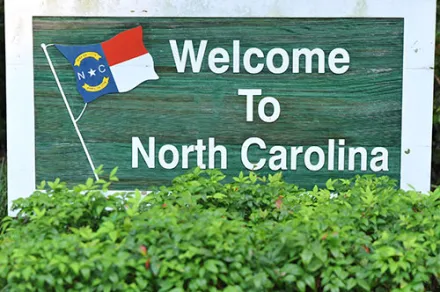
    In the last few weeks, legislators in two states have passed laws aimed at influencing upcoming supreme court decisions. In Kansas, trouble has brewed between the judiciary and the other two branches, stemming largely from state court decisions ordering the legislature to spend more on public education. Meanwhile, the Republican majority in the North Carolina legislature has instituted retention elections, in place of contested elections, for supreme court justices seeking additional terms.

    1
  • Pennsylvania Sees Record-Breaking Supreme Court Primary

    With three of the seven seats on the Pennsylvania Supreme Court up for election in November, the stakes were high in the May 19 primaries. The twelve candidates raised more than $5 million and spent approximately half of that on TV ads. The ads tended to focus on the need to restore the high court’s integrity, in light of the fact that two of the vacancies were created by resignations in the face of scandal.

    1
  • Supreme Court Adopts Amendments to the Federal Rules of Civil Procedure

    On April 29, 2015, the United States Supreme Court adopted amendments to the Federal Rules of Civil Procedure and submitted them to Congress. The long-awaited amendments, often described as a “package” of complementary amendments, focus on increasing cooperation, achieving proportionality in discovery, and encouraging early case management by judges.

    1
  • Expert Opinion

    U.S. Supreme Court: States Can Ban Judicial Candidates from Personally Seeking Campaign Cash

    In a ruling that took some fair courts advocates by surprise, the U.S. Supreme Court upheld the authority of states to bar judges and judicial candidates from personally soliciting campaign contributions. Chief Justice Roberts delivered the majority opinion in Williams-Yulee v. The Florida Bar, holding that “[a] State’s decision to elect judges does not compel it to compromise public confidence in their integrity.”

    1
  • West Virginia Ends Partisan Elections for Judges

    The West Virginia legislature has passed, and the governor has signed, a bill that makes elections for the state's judges nonpartisan. Despite the new legislation, it is not possible to remove all traces of partisanship from judicial races. An additional consequence of the new law is that it effectively ends straight-ticket voting for judges.

  • Former Alabama Chief Justice Shares Firsthand Perspective on Judicial Elections and Impartial Courts

    In a recent Politico piece, the former chief justice of Alabama's supreme court offered a firsthand perspective on the relationship between electing judges and maintaining impartial courts and judges, and other judges have shared similar sentiments. In 2012, Chief Justice Cobb participated in an IAALS roundtable, which reached consensus on several "cornerstones" for contested judicial elections.