News & Updates

List of news articles

Showing 141 - 159 out of 159 results for Public trust and confidence

  • IAALS’ Annual Dinner Focuses on Causes of Public Dissatisfaction with the Courts

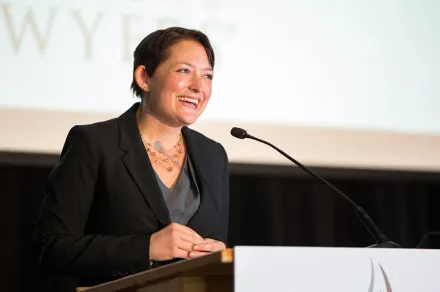
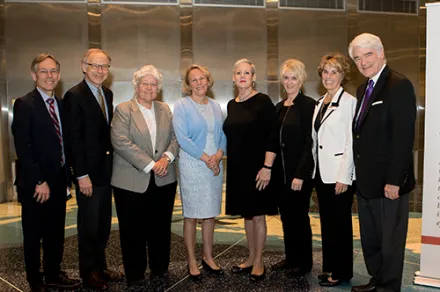
    In Colorado, April 19, 2018, will forever be known as “The Conference of Chief Justices Day” thanks to an official proclamation by Governor John Hickenlooper. The proclamation was delivered at IAALS’ annual Rebuilding Justice Award Dinner by Doug Scrivner, Chairman of the Board of Trustees at the University of Denver and IAALS Board of Advisors Member. The dinner centered around the Conference of Chief Justices (CCJ) and honored and celebrated their leadership and work to improve America’s civil and family courts. The issue of declining confidence in the courts was the subject of another evening highlight: a fireside chat with several attending Chief Justices.

    1
  • Conference of Chief Justices to Receive 2018 IAALS Rebuilding Justice Award

    On Thursday, April 19, IAALS will present the Conference of Chief Justices with our highest honor: the Rebuilding Justice Award. We are thrilled that several Chief Justices from across the nation will attend and Ohio Chief Justice Maureen O’Connor, President of the Conference of Chief Justices and chair of the National Center for State Courts Board of Directors, will accept the award.

    1
  • Illinois Judicial College Draws Hundreds of Judges, Calls to Action

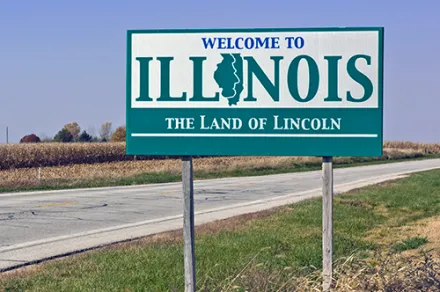
    Illinois takes judicial education seriously. In 2015, the state Supreme Court formed the Illinois Judicial College, and very recently I was honored to participate in its first full-week debut of courses. Over 400 judges participated and there were over 100 course offerings for them. At the initial plenary session, there was energy in the room—colleagues enjoying being together, eager to learn new things and share information.

    1
  • IAALS Partner Christine Whitman to Lead Democracy Task Force

    In response to the “enormous pressure” and polarization weighing on the American political landscape, the Brennan Center for Justice has launched the National Task Force on the Rule of Law and Democracy. One of the co-chairs of the Task Force is IAALS O’Connor Advisory Committee Member and former Governor of New Jersey Christine Todd Whitman. She is joined in leadership by co-chair and former U.S. Attorney Preet Bharara.

    1
  • Judging the Judges: A Blueprint for Judicial Excellence

    As part of the University of Denver’s Engaging Ideas series, IAALS Executive Director Rebecca Love Kourlis was interviewed about the importance of an independent judiciary—and IAALS’ model for sustaining it. In the video, titled “Judging the Judges,” Kourlis discusses how IAALS is helping improve state court systems through the O’Connor Judicial Selection Plan. “Public trust in the judiciary is central to its legitimacy and to its capacity to enforce its orders. Retaining that impartiality, independence, and integrity of the judicial branch, I think in this day and age, is more critical than perhaps it’s ever been.”

    1
  • Colorado Judges Teach Civics to the Public

    In a society where only 26 percent of adults can name all three branches of the federal government and a third cannot even name one, Colorado's judicial branch has sought to improve its citizens’ civics knowledge through Our Courts Colorado. The nonpartisan program provides civics education presentations in both English and Spanish for adults in their communities across the state, many given by state and federal judges.

    1
  • Strong Support for Civil Justice Reform

    A recent study conducted for Voices for Civil Justice, with support from the Public Welfare Foundation, found that voters strongly favor reform of the civil justice system. Overwhelming majorities of voters believe it is important to “ensure that everyone has access to the civil justice system” and “strongly support a wide range of services to enhance access.” Moreover, voters support increasing state funding to build a more accessible civil justice system. The survey highlights that equal justice under the law in our society is fundamental, with voters considering it a right, not a privilege.

    1
  • Procedural Justice: Public Perception of Court and Legal System Legitimacy

    Why do you obey the law? Because you are afraid of the consequences if you don't? Or perhaps because it is the right thing to do? How about, because you believe that "government has the right to dictate to [you] proper behavior"? The third option—believing that government's laws and legal process have legitimacy—may be the keystone to building the most effective legal system.

  • New Poll Shows that Voters Have Increasing Concerns about Judicial Impartiality

    According to a new poll, nearly nine in ten voters believe that judicial campaign support—whether in the form of direct contributions or independent spending—influences judicial decisions. This figure is a sharp increase from similar polls conducted over the last decade. These heightened concerns could be a reaction to the U.S. Supreme Court's decision in Citizens United or to a marked rise in judicial election spending, particularly by outside groups, in recent years.

  • Justice O'Connor Talks "Fair Courts" with State Legislators

    On August 12, retired U.S. Supreme Court Justice Sandra Day O'Connor delivered the keynote address at the 2013 Legislative Summit of the National Conference of State Legislatures in Atlanta, Georgia. Justice O'Connor expressed concern that processes for selecting judges are becoming increasingly politicized, and that civics education is essential in helping young people understand that judges are obligated to make decisions based on the law, even if those decisions are politically unpopular.

  • Diverse Coalition Works to Preserve Judicial Quality and Public Trust in Minnesota

    In Minnesota, a broad-based group known as the Coalition for Impartial Justice, which includes more than 30 business, labor, religious, citizen, and legal groups, is working to implement the 2007 recommendations of the Quie Commission. The commission was unanimous in calling for the adoption of a "merit selection" process for judges and a performance evaluation program, with a majority of the commission favoring retention elections for subsequent terms.

  • Wisconsin Bar Committee Proposes Single, Nonrenewable Term for Justices

    Following an 18-month study, a Wisconsin state bar task force proposed that supreme court justices serve a single 16-year term. Justices currently serve 10-year terms and may stand for reelection. Though term limits would not stem the tide of candidate and special interest spending in the state's judicial elections, supporters believe term limits could help restore the public's trust in a court that has been plagued in recent years by alleged ethics violations and interpersonal conflicts.

  • Justice Sandra Day O'Connor Reflects on the Current State of the Judiciary

    In an interview with Parade Magazine, Justice Sandra Day O'Connor, Honorary Chair of the Advisory Committee to the Quality Judges Initiative, discusses why approval ratings for the U.S. Supreme Court justices have fallen, stressing that the public's broken confidence in the courts is due to misconceptions that the Court should base their decisions on political and personal beliefs rather than on the law.

  • New Website Focuses on Procedural Fairness in Courts

    A new site devoted to procedural fairness in the courts was recently launched by Judge Kevin Burke, District Judge in the Hennepin County (Minn.) District Court; Judge Steve Leben, Judge, Kansas Court of Appeals; the National Center for State Courts (with researcher David Rottman as its lead blogging participant); and Professor Tom Tyler, of Yale Law School.

  • Stanching the Cash Flow

    The authors suggest that, though the Supreme Court of the United States has in recent years struck down campaign finance laws, it may be willing to tolerate limits on spending in judicial elections. Click here to read the article.