
Allied Legal Professionals
Project Status: Fostering Program Growth & Alignment around Best Practices

Nationwide Program Features
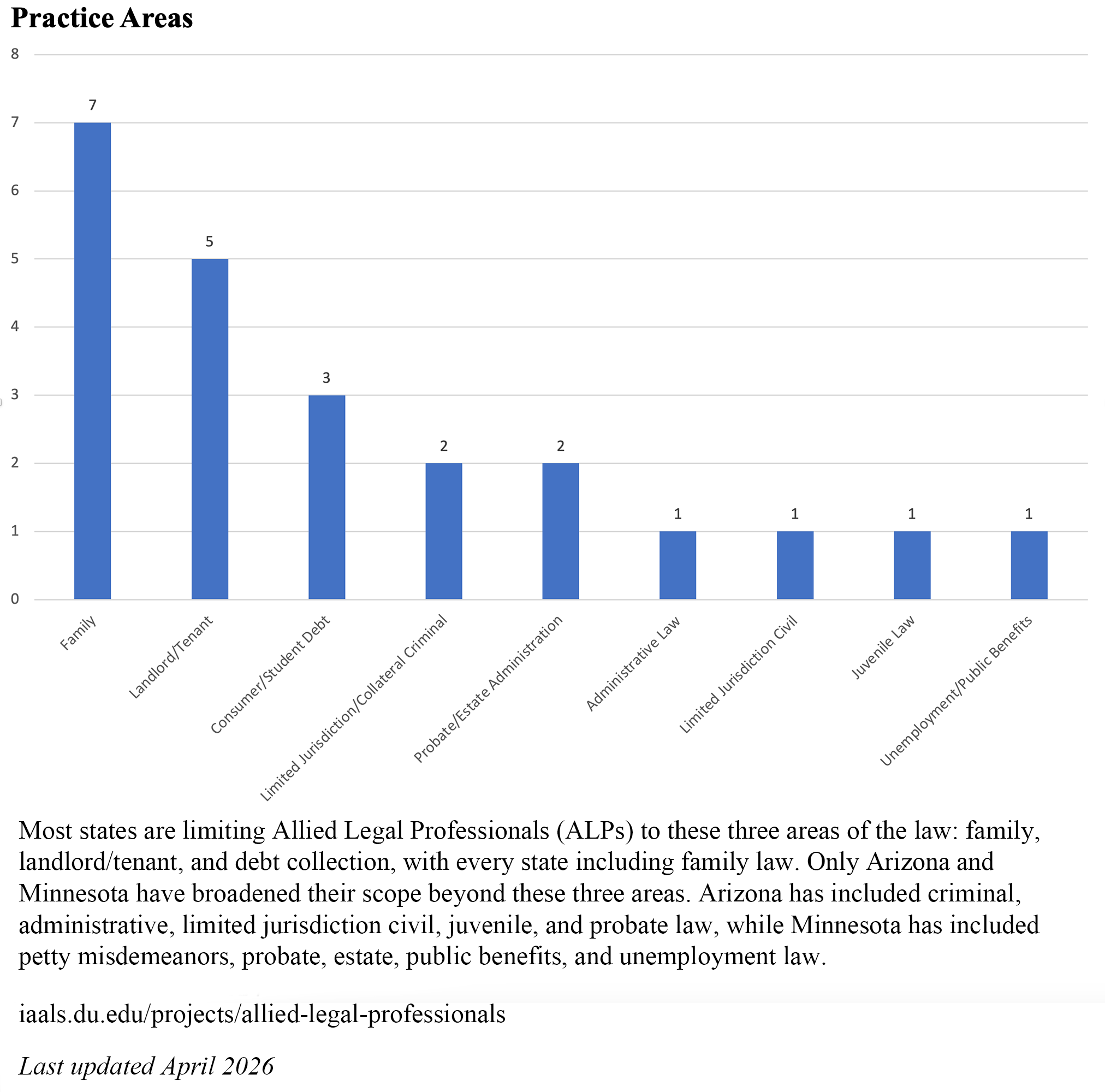
Practice Areas
Most states are limiting Allied Legal Professionals (ALPs) to these three areas of the law: family, landlord/tenant, and debt collection, with every state including family law. Only Arizona and Minnesota have broadened their scope beyond these three areas. Arizona has included criminal, administrative, limited jurisdiction civil, juvenile, and probate law, while Minnesota has included petty misdemeanors, probate, estate, public benefits, and unemployment law.
In-Court Representation
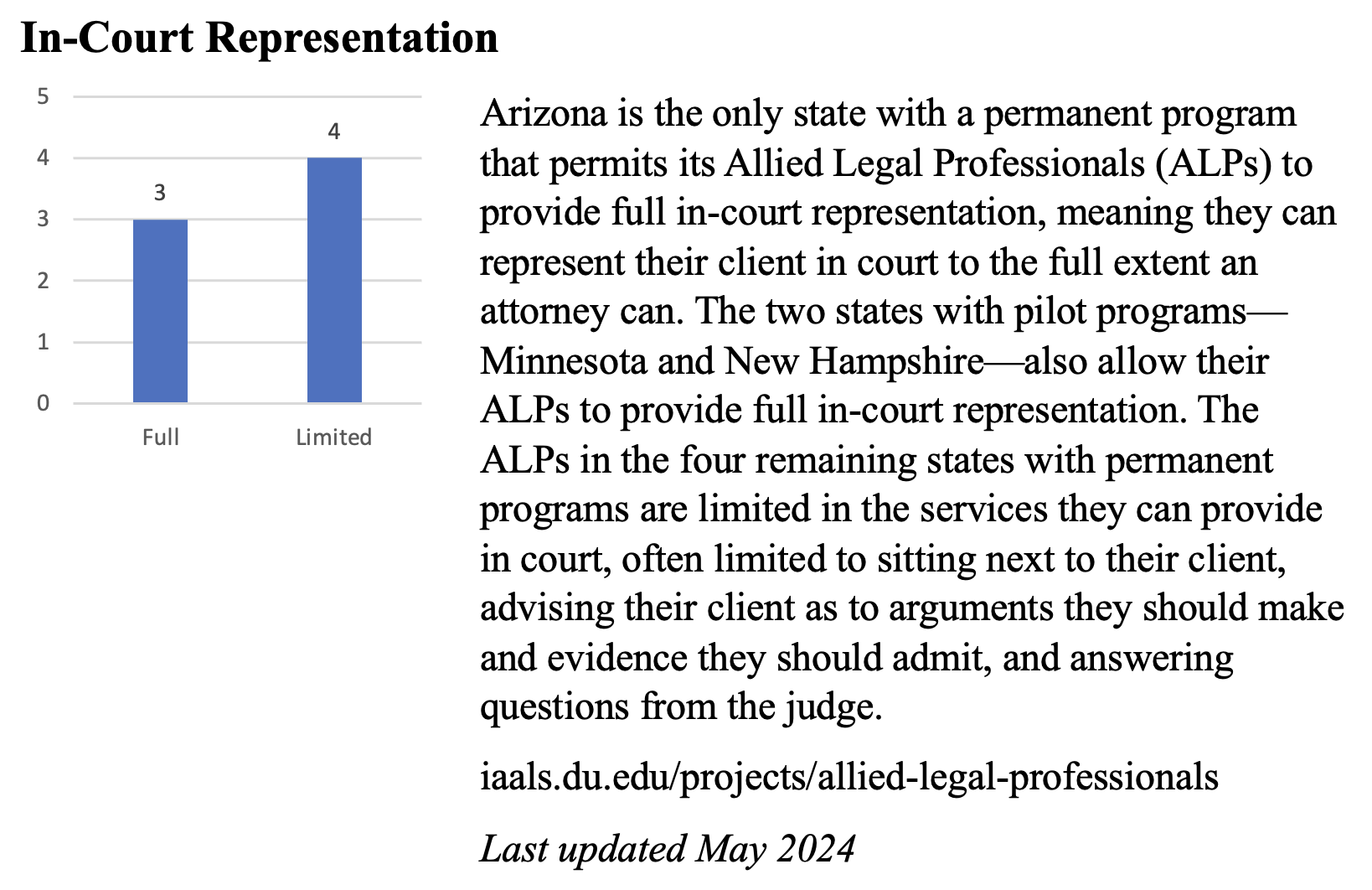
Arizona, Minnesota, and New Hampshire permit their ALPs to provide full in-court representation, meaning they can represent their clients in court to the full extent an attorney can. While Minnesota and New Hampshire ALPs require attorney supervision, they can represent their clients in court without their supervising attorney present. The four remaining states limit the services their ALPs can provide in court, often limited to sitting next to their client, making opening and closing statements, advising their client as to arguments they should make and evidence they should admit, and answering questions from the judge.
Ownership Interest
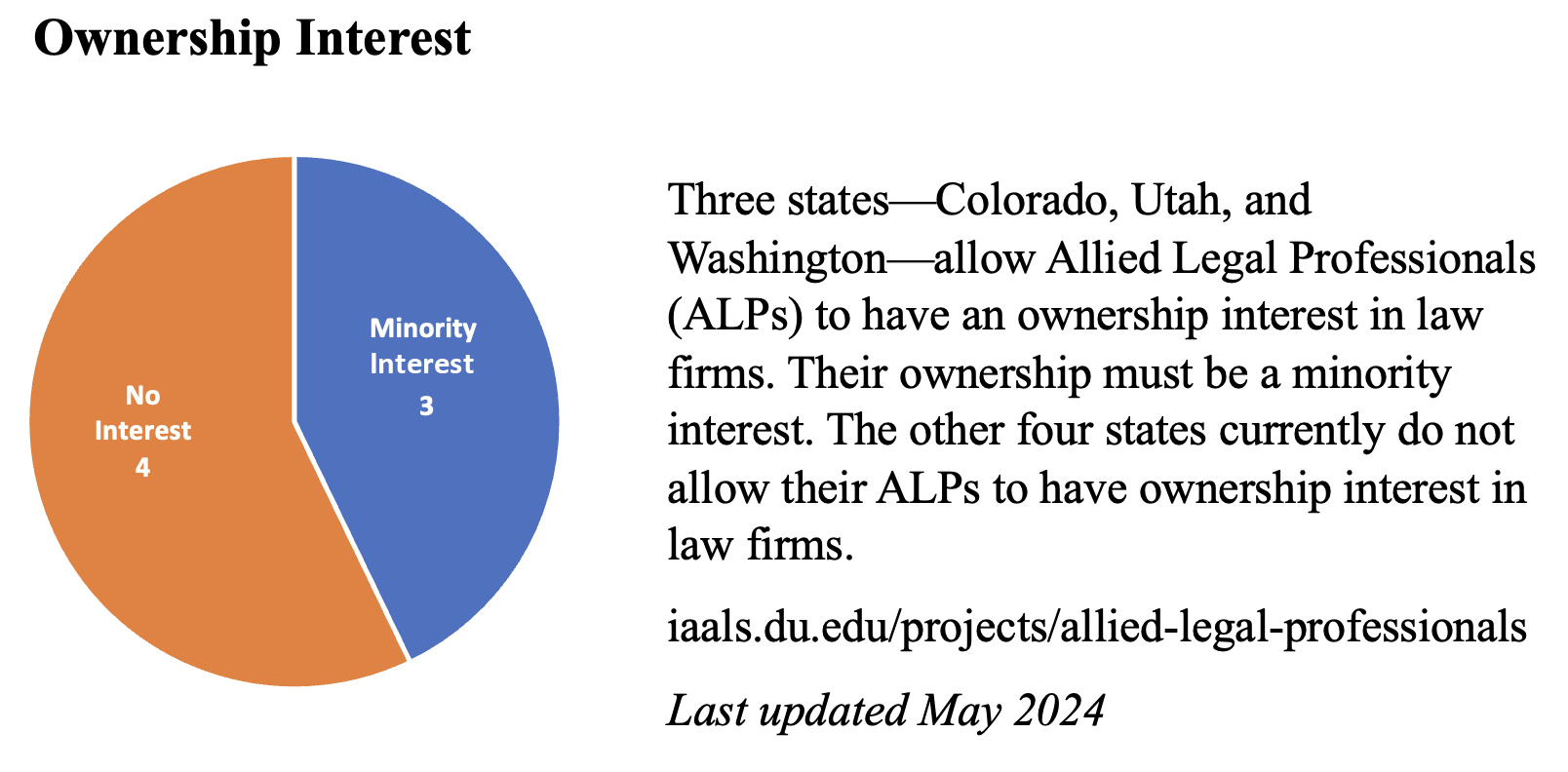
Three states—Colorado, Utah, and Washington—allow ALPs to have an ownership interest in law firms. Their ownership must be a minority interest. The other four states currently do not allow their ALPs to have ownership interest in law firms.
Practical Training
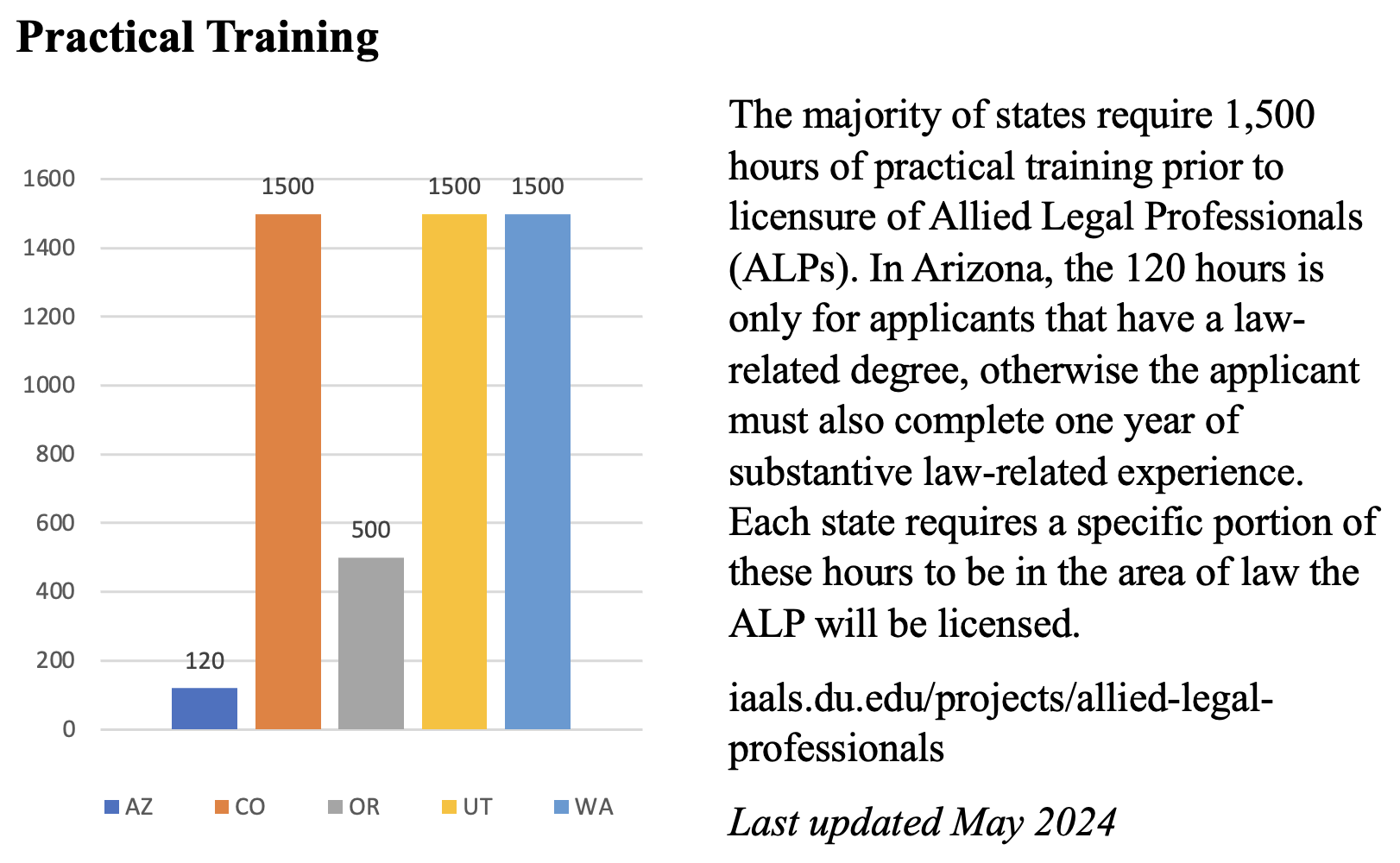
The majority of states require 1,500 hours of practical training prior to licensure of ALPs. In Arizona, the 120 hours is only for applicants that have a law-related degree, otherwise the applicant must also complete one year of substantive law-related experience. Each state requires a specific portion of these hours to be in the area of law the ALP will be licensed.
Regulatory Requirements
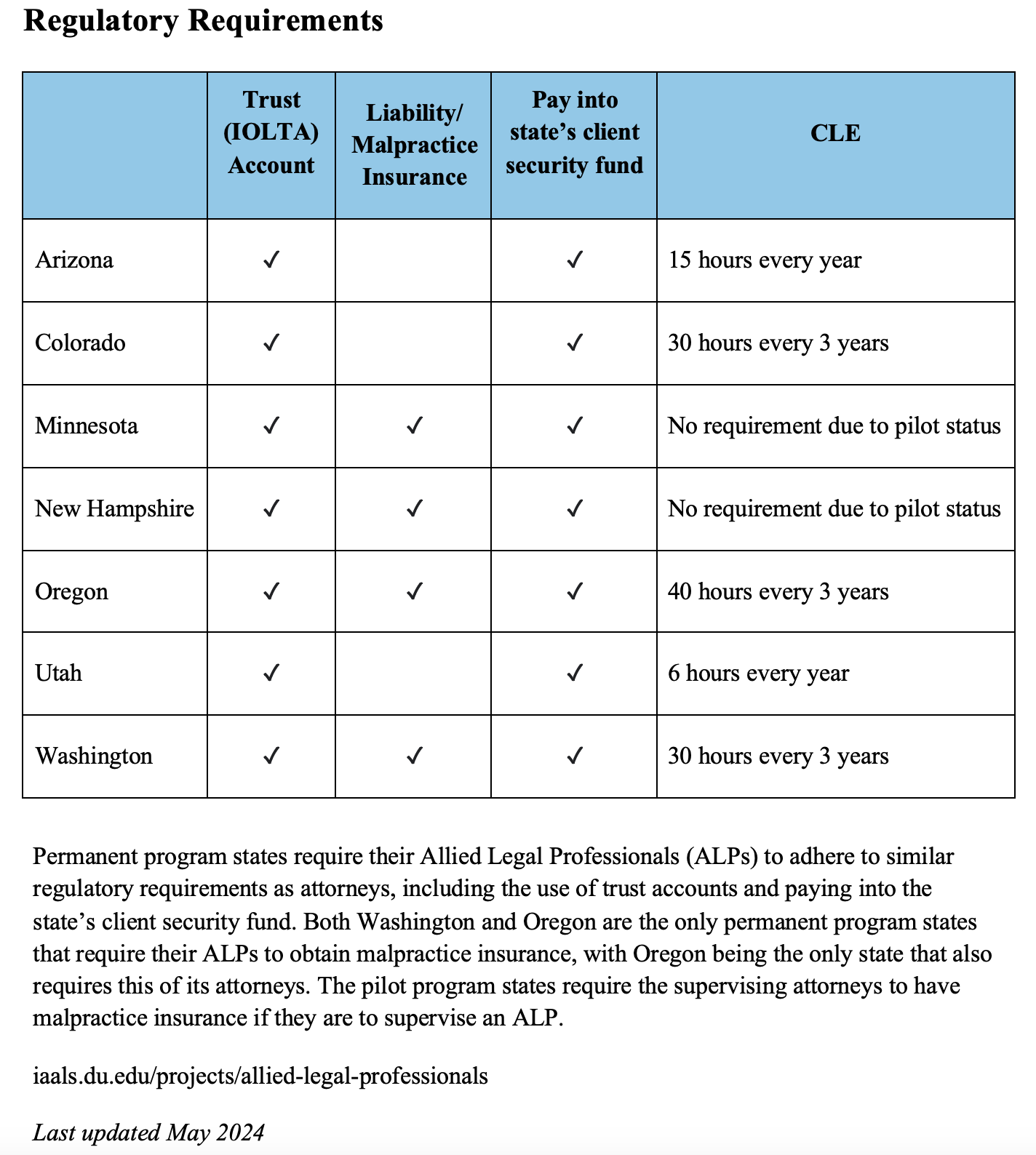
States that allow their ALPs to work independently of attorneys require them to adhere to similar regulatory requirements as attorneys, including the use of trust accounts and paying into the state's client security fund. Washington and Oregon require their ALPs to obtain malpractice insurance; similarly, Minnesota and New Hampshire—the two states that require attorney supervision—require the supervising attorneys to obtain malpractice insurance that also covers their ALPs.
Roles and Responsibilities
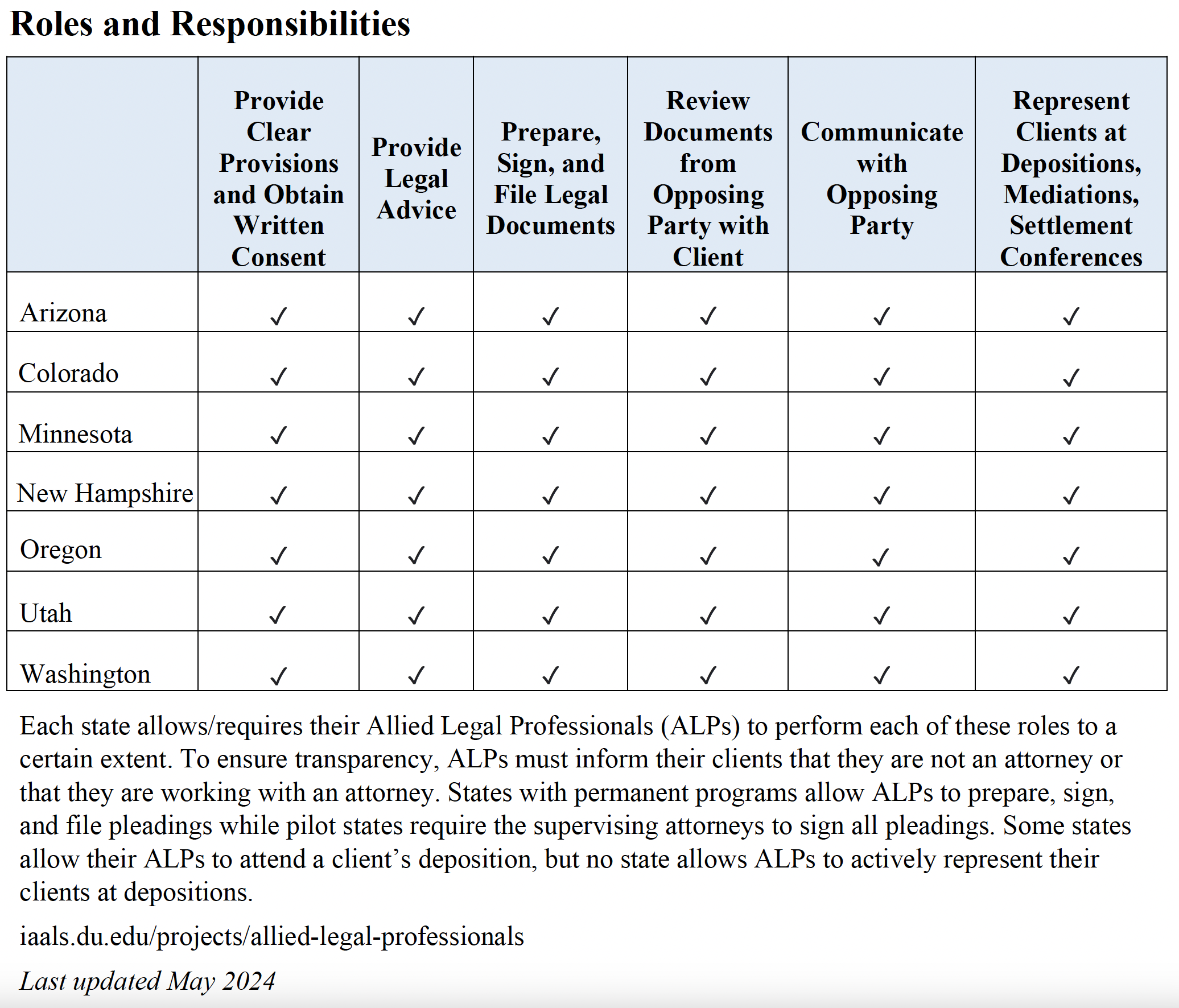
Each state allows/requires their ALPs to perform each of these roles to a certain extent. To ensure transparency, ALPs must inform their clients that they are not an attorney or that they are working with an attorney. With one exception, states with permanent programs allow ALPs to prepare, sign, and file pleadings while the one pilot state requires the supervising attorneys to sign all pleadings. While some states allow their ALPs to attend a client's deposition, no state allows ALPs to actively represent their clients at depositions.
Attorney Supervision
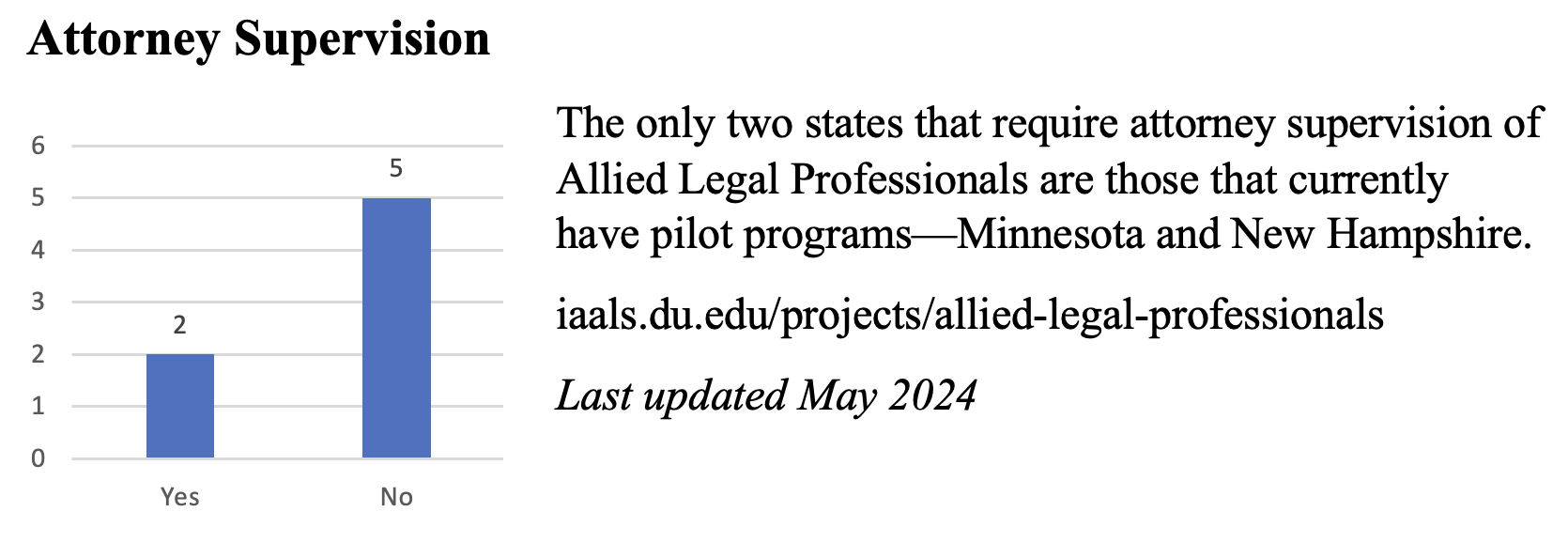
The only two states that require attorney supervision of ALPs are those that began as pilot programs: Minnesota and New Hampshire. Minnesota has since transitioned to a permanent program, and it opted to keep the attorney supervision requirement.
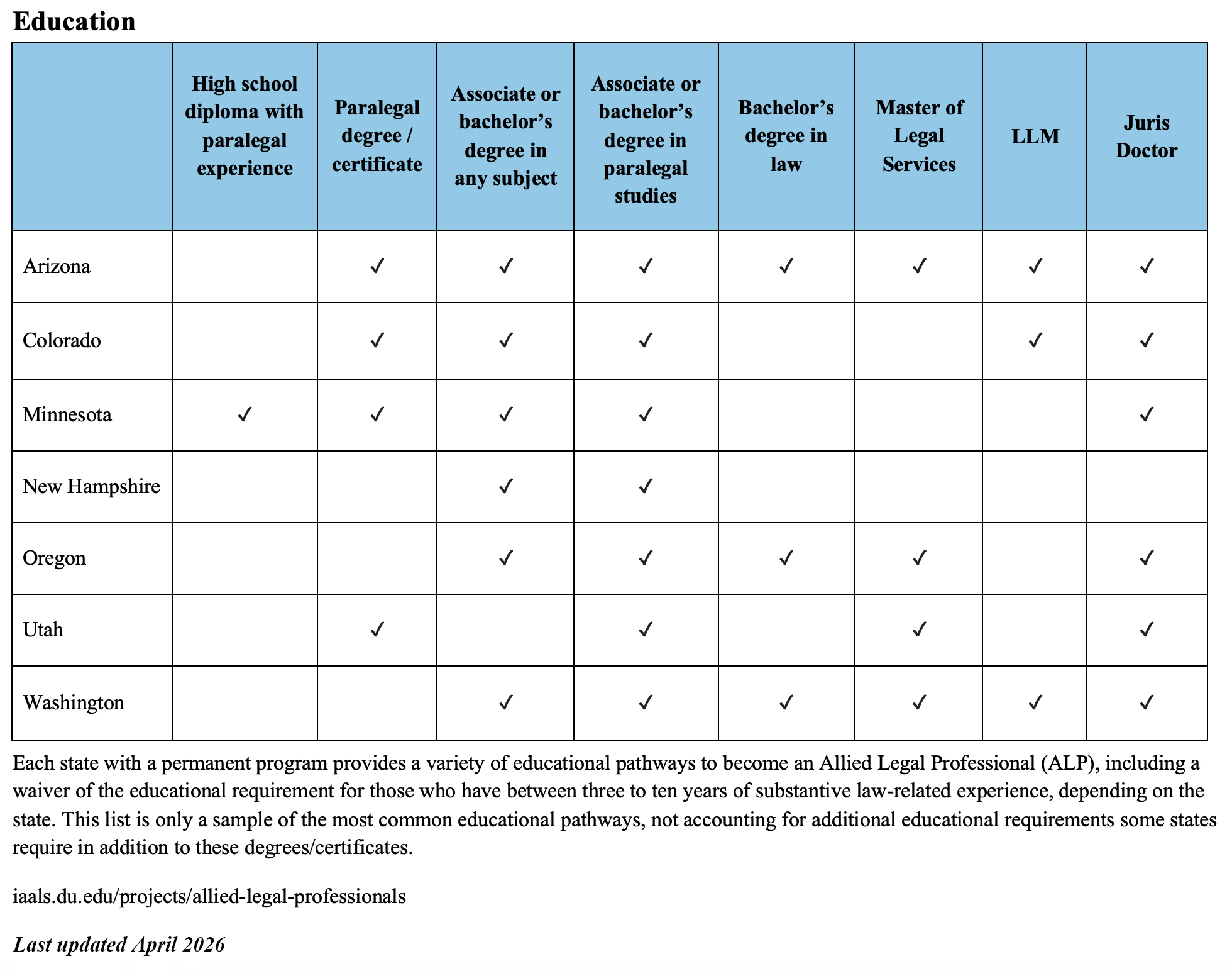
Education
Each state with a permanent program provides a variety of educational pathways to become an ALP, including a waiver of the educational requirement for those who have between three to ten years of substantive law-related experience, depending on the state. This list is only a sample of the most common educational pathways, not accounting for additional educational requirements some states require in addition to these degrees/certificates.
Examinations
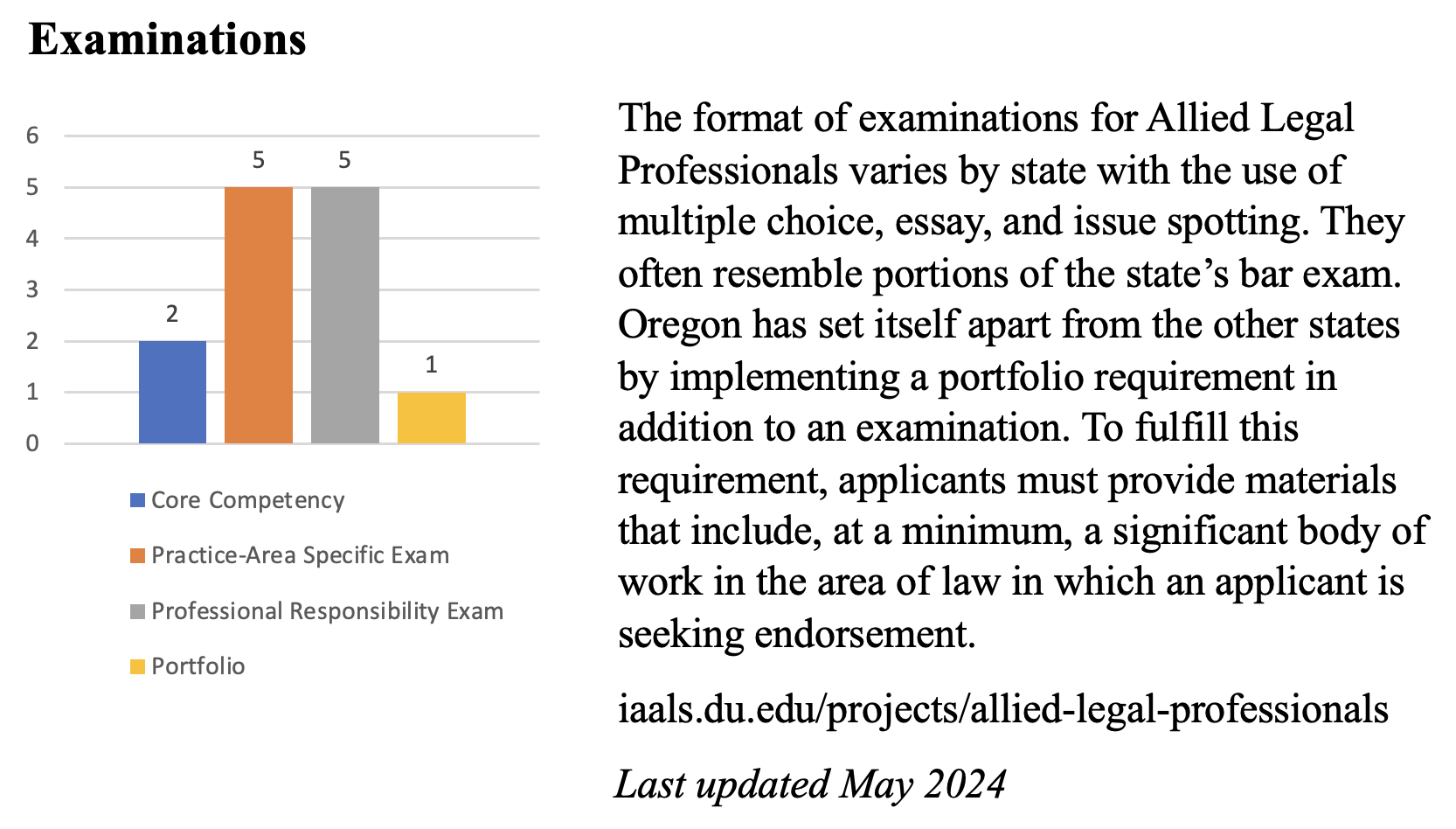
The format of examinations for Allied Legal Professionals varies by state with the use of multiple choice, essay, and issue spotting. They often resemble portions of the state’s bar exam. Oregon has set itself apart from the other states by implementing a portfolio requirement in addition to an examination. To fulfill this requirement, applicants must provide materials that include, at a minimum, a significant body of work in the area of law in which an applicant is seeking endorsement.