


Regulating AI in Legal Services
Project Status: Toolkit & Resources Released; Additional Guidance Underway

Recommendations for a Phased Approach to Regulating the Use of AI
IAALS has been at the forefront of efforts to rethink how the legal profession regulates the delivery of legal services. While the legal profession has been abuzz with questions about how lawyers should (or should not) use AI in their practice, how judges might use it in their courtrooms, and how it might outperform law students on the bar exam, how AI might deliver legal services directly to the public has received less fanfare.
Toolkit for Regulators & Leaders Exploring Approaches to AI in Legal Services
This toolkit, developed by IAALS and the Duke Center on Law & Tech, provides resources that are intended to support exploration of the Phase 1 “soft power” approaches to legal regulation—non-binding strategies like guidance, best practices, and prosecutorial discretion that influence behavior without formal rule changes.

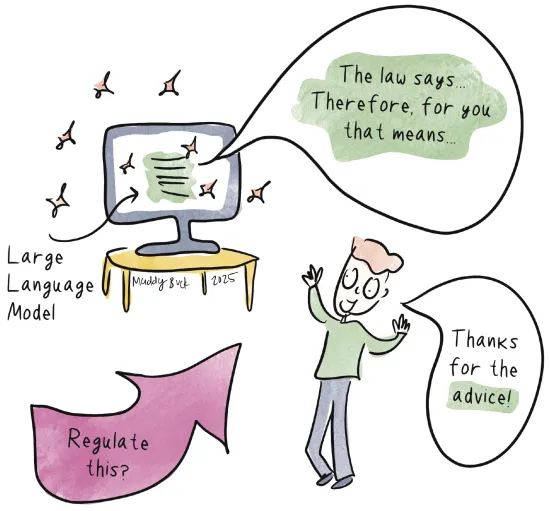
Courts, legal aid, and entrepreneurs have already been building tech-powered legal tools that serve those in need, but without changes to unauthorized practice of law (UPL), these legal-specific innovations operate in a regulatory environment that creates uncertainty and limits their potential reach and impact. UPL must change to allow for responsible innovation while still protecting consumers. With prosecutorial guidance and non-prosecution policies, regulators can publicly state which categories of AI and tech-powered legal tool conduct they will and will not prioritize for UPL enforcement, providing the clarity innovators need to move forward.
This toolkit draws on Colorado's experience adopting a UPL non-prosecution policy, along with input from more than 250 stakeholders over two years of convenings, to offer a modular set of building blocks other jurisdictions can adapt.
Colorado’s experience shows that regulators can provide greater clarity around UPL enforcement without abandoning their responsibility to protect consumers. Putting those enforcement priorities in writing gives regulators, innovators, and the public a clearer understanding of where the lines are, while giving us the opportunity to learn from what happens in practice.
— Jessica Yates
Attorney Regulation Counsel, Colorado Supreme Court