
Prosecutorial Guidance and Non-Prosecution Policies
A toolkit for regulators and leaders exploring approaches to AI in consumer-facing legal services
The vast majority of low- and middle-income Americans and small businesses are unable to access affordable legal help when they need it. And many people do not even recognize that what they are facing is a legal problem in the first place, and so never seek help at all.
AI and technology-powered legal tools hold real promise for helping close the justice gap, as well as helping people identify their problems as legal and route them toward appropriate help. But a significant obstacle to these innovations stands in the way: Unauthorized Practice of Law (UPL) rules that are vague, inconsistently enforced, and applied differently across all 50 states.
Courts, legal aid, and entrepreneurs have already been building tech-powered legal tools that serve those in need, but without UPL changes, these legal-specific innovations operate in a regulatory environment that creates uncertainty and limits their potential reach and impact. UPL must change to allow for responsible innovation while still upholding the core goal of UPL: consumer protection.
Prosecutorial guidance and non-prosecution policies are a practical, near-term way for regulators to create room for responsible innovation while preserving consumer protection. Regulators can publicly state which categories of AI and tech-powered legal tool conduct they will and will not prioritize for UPL enforcement, providing the clarity innovators need to move forward.
This toolkit is designed to help regulators and leaders:
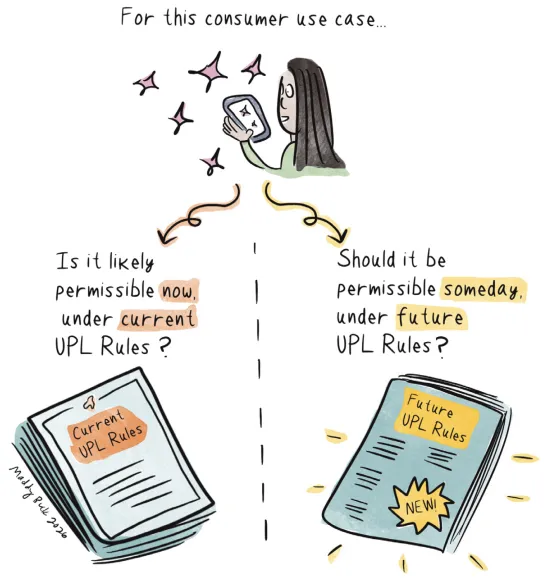
- Consider whether this regulatory approach fits your jurisdiction
- Convene working groups to explore reform
- Draft policy language
- Build support with skeptical stakeholders
Because they operate through enforcement discretion rather than formal rulemaking, these policies can be put in place quickly and adjusted as the technology evolves—a decisive advantage in a field moving as fast as AI, where a multi-year rulemaking cycle risks being outdated before it takes effect.
This toolkit draws on Colorado's experience adopting a UPL non-prosecution policy, along with input from more than 250 stakeholders over two years of convenings, to offer a modular set of building blocks other jurisdictions can adapt. The appropriate approach in each jurisdiction or state will vary based on local enforcement authority, regulatory structure, and political context.
"Colorado’s experience shows that regulators can provide greater clarity around UPL enforcement without abandoning their responsibility to protect consumers. Putting those enforcement priorities in writing gives regulators, innovators, and the public a clearer understanding of where the lines are, while giving us the opportunity to learn from what happens in practice." — Jessica Yates, Attorney Regulation Counsel for the Colorado Supreme Court
Publication PDF