News & Updates

List of news articles

Showing 241 - 260 out of 494 results for Civil justice reform

  • Expert Opinion

    The Legal Marketplace is Changing and Innovating

    Consumer demand and innovations in the legal marketplace, especially technological advances, are leading the charge for changes in the legal profession. Many legal educators, lawyers, court administrators, and judges are embracing the evolution, but others are still reluctant to disrupt the status quo.

    1
  • Access to Legal Services for Low Income People on President’s List of Cuts

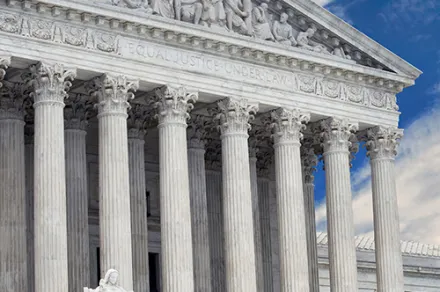
    On the front of the United States Supreme Court building in Washington, D.C., is the proclamation “Equal Justice Under Law.” However, according to our Cases Without Counsel study, in some jurisdictions nearly 80 percent of people with a court case end up representing themselves. For many, not being able to afford a lawyer is the main reason for the wide justice gap.

  • Annual Report

    The Stage is Set: IAALS 2016 Annual Report

    I am so proud to present to you our 2016 Annual Report, capturing a remarkable year in our existence and representing the work of our truly visionary staff. Last year we celebrated our tenth-year anniversary. As we embark upon the next ten, in this report we embrace the theme: The Stage is Set: Lights, Camera, Innovation. Throughout the report, you will find not only evidence of what we have accomplished, but also the ways in which we are setting the stage for continuing and fundamental change. You will also find quotes from Nobel Prize-winning bards, Tony Award-winning lyricists, and favorite authors—that inspire the creative in each of us. 

    1
  • Not to be Overshadowed by Discovery: The Cost and Delay of Motions

    The last ten years has seen an intense and almost singular focus on discovery. E-discovery has been a big reason for this, given its impact on the entire discovery process from identification to production. Nevertheless, there is another important aspect to the pretrial system that also results in great cost and delay—motions.

    1
  • Recommendations Turn Into Action on the Ground

    In July 2016, the Conference of Chief Justices and the Conference of State Court Administrators recognized the important needs of litigants in our state courts and responded by adopting a set of 13 Recommendations focused on ensuring our courts are affordable, efficient, and fair for all.

    1
  • A Well-Deserved Recognition for Our Judges

    Last year, U.S. Supreme Court Chief Justice Roberts dedicated his 2015 year-end report on the State of the Judiciary to extolling the new amendments to the Federal Rules of Civil Procedure. He noted the amendments serve as an important stride forward…

  • One Year In: Judges Examine the Impact of Changes to the Rules of Civil Procedure

    It has been just over a year since substantial changes were made to the Federal Rules of Civil Procedure, aimed at reducing the high costs and long delays faced by civil court litigants. And, this effort has not been limited to the federal courts. Many state-level changes have also been implemented across the country and Colorado has emerged as a leader by incorporating the federal amendments and making permanent many aspects of its Civil Access Pilot Project.

    1
  • Expert Opinion

    The 2015 Federal Rule Amendments—One Year Later

    One year ago today, the long awaited amendments to the Federal Rules of Civil Procedure went into effect. The “package” of amendments included changes across a number of rules and focused on increasing cooperation, achieving proportionality in discovery, and encouraging early case management by judges. A new Rule 37(e) was added addressing sanctions for the failure to preserve electronically stored information.

    1
  • Colorado Equal Access Center Aims to Narrow the Justice Gap

    Colorado Supreme Court Chief Justice Nancy Rice is implementing a new resource for self-represented litigants—the Colorado Equal Access Center. The Center supplements the Colorado Judicial Department’s ongoing efforts to respond to a substantial justice gap in Colorado courts (and in states around the country).

    1
  • ABA Taking Action to Limit Impact of Implicit Bias in the Justice System

    Implicit bias can obstruct the goal of fair, trusted, and accountable courts, and many groups have recognized how such unconscious perceptions can affect litigants, judges, and other aspects of the legal system. Recently, the American Bar Association (ABA) House of Delegates took action by adopting Resolution 116, which amended the ABA Principles for Juries and Jury Trials.

    1
  • Education and Assistance Available to Support State Civil Justice Reform

    In July, the Conference of Chief Justices Civil Justices approved a resolution endorsing the Recommendations of its Civil Justice Improvements Committee. The Committee’s report, Call to Action: Achieving Justice for All, issues a call to action to the state courts to improve our civil justice system—and a strategic response in the form of thirteen recommendations for restoring function and faith in our civil justice system.

    1