News & Updates

List of news articles

Showing 201 - 220 out of 828 results for Judiciary

  • Pennsylvania Sees Record-Breaking Supreme Court Primary

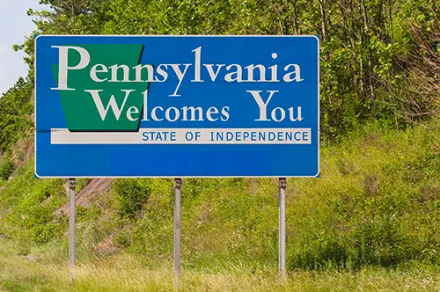
    With three of the seven seats on the Pennsylvania Supreme Court up for election in November, the stakes were high in the May 19 primaries. The twelve candidates raised more than $5 million and spent approximately half of that on TV ads. The ads tended to focus on the need to restore the high court’s integrity, in light of the fact that two of the vacancies were created by resignations in the face of scandal.

    1
  • Supreme Court Adopts Amendments to the Federal Rules of Civil Procedure

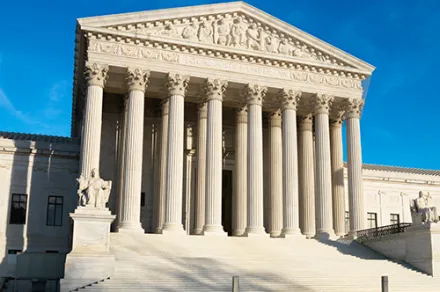
    On April 29, 2015, the United States Supreme Court adopted amendments to the Federal Rules of Civil Procedure and submitted them to Congress. The long-awaited amendments, often described as a “package” of complementary amendments, focus on increasing cooperation, achieving proportionality in discovery, and encouraging early case management by judges.

    1
  • Expert Opinion

    U.S. Supreme Court: States Can Ban Judicial Candidates from Personally Seeking Campaign Cash

    In a ruling that took some fair courts advocates by surprise, the U.S. Supreme Court upheld the authority of states to bar judges and judicial candidates from personally soliciting campaign contributions. Chief Justice Roberts delivered the majority opinion in Williams-Yulee v. The Florida Bar, holding that “[a] State’s decision to elect judges does not compel it to compromise public confidence in their integrity.”

    1
  • West Virginia Ends Partisan Elections for Judges

    The West Virginia legislature has passed, and the governor has signed, a bill that makes elections for the state's judges nonpartisan. Despite the new legislation, it is not possible to remove all traces of partisanship from judicial races. An additional consequence of the new law is that it effectively ends straight-ticket voting for judges.

  • Former Alabama Chief Justice Shares Firsthand Perspective on Judicial Elections and Impartial Courts

    In a recent Politico piece, the former chief justice of Alabama's supreme court offered a firsthand perspective on the relationship between electing judges and maintaining impartial courts and judges, and other judges have shared similar sentiments. In 2012, Chief Justice Cobb participated in an IAALS roundtable, which reached consensus on several "cornerstones" for contested judicial elections.

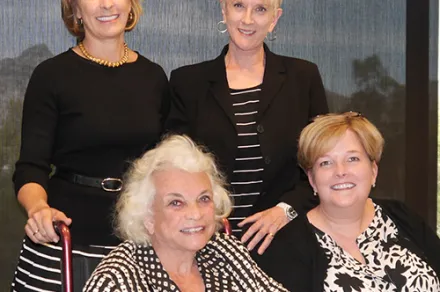
  • Sandra Day O'Connor Inducted in Arizona Women's Hall of Fame

    On March 12, retired U.S. Supreme Court Justice Sandra Day O'Connor was inducted in the Arizona Women's Hall of Fame as a Living Legacy. Justice O'Connor was raised on a ranch near Duncan, Arizona, and was selected for her “decades of work as a judge and her legacy as the first woman appointed to the nation's highest court."

  • Recognizing Women Who Paved the Way in Our Federal Courts

    The Quality Judges Initiative believes that court systems should reflect the social makeup of their communities, and therefore should be diverse among many demographics. As March is Women's History Month, we recognize the many great women who have laid a foundation for inclusion in the federal judiciary. The U.S. Courts have recognized several women this month, to which we add one more.

  • O'Connor Advisory Committee Member Cited in Support of Impartial Kansas Courts

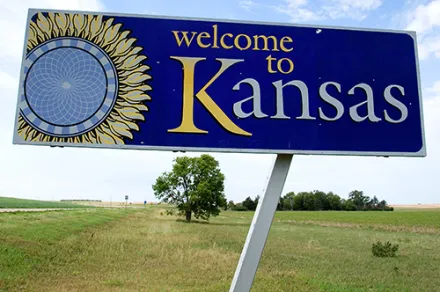
    As has become standard operating procedure in the last several sessions, the Kansas legislature is once again considering proposals to alter the process for selecting the state's appellate judges. Chief Justice Lawton Nuss has spoken out against efforts to end Kansas' merit selection process for appellate judges and has found an ally in O'Connor Advisory Committee member and former Chief Justice of Texas Wallace Jefferson.

  • Bar Rating Process for Pennsylvania Judicial Candidates Comes Under Fire

    Pennsylvania is one of two states that is electing supreme court justices in 2015. To provide the public with information about judges on the ballot, the Pennsylvania Bar Association offers ratings of appellate judicial candidates provided by the Bar's Judicial Evaluation Commission (JEC). But, a sitting commonwealth court judge and supreme court candidate has called that evaluation process into question.

  • John Oliver's Humorous Take on a Serious Issue

    Social and mainstream media is abuzz with coverage of a recent segment on HBO's Last Week Tonight with John Oliver, in which Oliver skewers judicial elections. With clips of campaign ads that range from the absurd to the appalling, and extreme examples of the tactics some judicial candidates have used to garner campaign contributions, Oliver shines a hilarious but no less accurate light on the "horrifying spectacle" of judicial elections.

  • Recent Public Opinion Survey Provides Insights into "The State of State Courts"

    A recent survey commissioned by the NCSC explored public opinions of the court system. Compared to a similar survey conducted in April 2012, assessments of state court systems on such measures as integrity, customer service, and stewardship of taxpayer dollars have improved. However, the public still has concerns about the influence of partisanship and political dealmaking, as well as the potential for waste and inefficiency, in the justice system.

  • Colorado-Based Civics Education Program Receives National Award

    IAALS congratulates Colorado's Judicially Speaking on receiving the Sandra Day O'Connor Award for Advancement of Civics Education from the National Center for State Courts. Judicially Speaking is a civics education program founded by Colorado trial judges, including friend of IAALS Judge David Prince. The program is designed to promote middle and high school students' understanding of the role of the judiciary in the American legal system.

  • Expert Opinion

    Williams-Yulee v. Florida Bar: Is Justice for Sale on the Campaign Trail?

    Last Tuesday’s Supreme Court argument was the latest chapter in the Court’s struggle to balance electoral candidates’ right to solicit campaign donations against the appearance or actual threat of corruption that arises when litigants or attorneys donate to a judge’s election campaign and later appear before that same judge in court. What all the Justices seemed to agree about—that electing state court judges poses great risk to the legitimacy of the states’ judiciaries—remains beyond their power to remedy.

  • President Obama Reaches Milestones in Naming Judges in 2014

    According to data presented by Russell Wheeler of the Brookings Institution, President Obama has seen a higher judicial confirmation rate (92 percent) after six years in office than did President George W. Bush (84 percent) and President Clinton (89 percent) at this point in their terms. President Obama is also making his mark on the federal courts in terms of diversity. The 305 Obama-nominated judges are the most diverse group ever.

  • Legislators to Target State Courts in 2015

    In the upcoming legislative session in a handful of states, lawmakers are expected to propose legislation aimed at courts and judges. Some Washington legislators have filed a bill that would make the state's judicial elections partisan. Two bills that Wisconsin lawmakers plan to file in 2015 would impact the Chief Justice. And, the Kansas legislature will likely take up a proposed constitutional amendment to change the way supreme court justices are chosen.

  • Malia Reddick on Maintaining Confidence in Delaware's Judicial Nominating Commission System

    Delaware Law Weekly recently published an article discussing how judicial vacancies are filled in Delaware. Specifically, the article focused on the state’s Judicial Nominating Commission (JNC) and whether it is appropriate for members of the JNC to resign and then apply for judicial positions. IAALS's own Malia Reddick spoke to the problems created by a process where this is allowed.

  • New Study: Partisan Judicial Elections Lead to Poorer Quality Courts

    According to a recent study, Alabama should move from partisan elections of judges to commission-based gubernatorial appointment in order to ensure a stable, predictable, and fair legal system for businesses and promote long-term economic growth. The study explores the correlation between states' methods for selecting judges and how attorneys perceive judges' competence and impartiality, as well as other aspects of states' legal environments.

  • Expert Opinion

    Creation of Nevada Appeals Court Finally Approved in 2014: The Road So Far

    In a historic 53.78%–46.22% decision, which is already beginning to transform the state's judiciary in significant ways, Nevada voters elected to create an Intermediate Court of Appeals during the November 2014 election cycle. Nevada has demonstrated that, with right mindedness and well-placed determination on behalf of achieving a high-functioning and efficient legal system, change and progress will eventually prevail.

  • The Docket: How Should We Select Our Judges?

    A recent article in the Denver Bar Association’s The Docket reviewed the dilemma that surrounds how states select and retain judges. In the article, Colorado's merit selection system is highlighted as a nationally recognized model for ensuring a judiciary that is free from politics, while also affording citizen input. Colorado's process for choosing judges mirrors the four-part O'Connor Plan, IAALS' collaboration with Justice Sandra Day O'Connor.