The world at large is constantly evolving, and so must our civil justice system. In on 2023 Annual Report, read how our work centers the people and how our solutions cascade from IAALS to the millions who benefit nationwide.
The Above the Line Network aims to tackle challenges in middle-class legal access by fostering collaboration and advocating for systemic changes. Spanning efforts across North America and beyond, ATLN is dedicated to delivering quality, affordable legal services while amplifying the voices of the often-overlooked middle class.
Throughout the past year, IAALS has been at the forefront of advancing justice by broadening access to legal assistance, rethinking regulation, and redefining legal licensure. As we step into 2024, we remain dedicated to bringing about transformative change within the justice system.
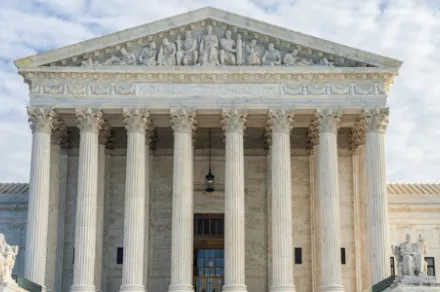
The U.S. Supreme Court recently adopted a code of ethics to enhance transparency and trust. However, critics note its reliance on self-enforcement, vagueness, and similarity to existing practices, raising concerns about its impact on justices' behavior and public confidence.
For states looking to implement or improve an allied legal professional program, IAALS' new report provides best practices regarding considerations like fee sharing, regulatory requirements, and program costs.
Data from current ALP programs suggests that concerns about consumer protection are largely unfounded. Expanding these programs can deliver competent legal help to countless individuals who lack access to traditional legal services.
The election—and subsequent threats of impeachment—of Wisconsin Supreme Court Justice Janet Protasiewicz has raised concerns about the politicization of the judiciary. These developments underscore the need for merit-based judicial selection to ensure impartiality and public trust in the judicial system.
For states looking to implement or improve an allied legal professional program, IAALS' new report provides best practices regarding considerations like in-court representation; eligibility, education, and practical training; and testing.
While acknowledging the crucial role of our Constitution and its enduring significance in our nation, we can also advocate for the ongoing enhancement of our justice system to fully uphold the principles of the rule of law.
In July, the Senate Judiciary Committee approved legislation establishing more robust ethics standards for the U.S. Supreme Court. The legislation and the events that triggered its proposal highlight the significance of maintaining public confidence in the integrity and fairness of both court systems and judicial officials.
For states looking to implement or improve an allied legal professional program, IAALS' new report provides best practices regarding considerations like titles, practice areas, roles and responsibilities, and attorney supervision.
Each state with an allied legal professional program has its own unique qualifications to become licensed, but one thing all programs share is that the requirements are robust. Data shows ALPs competently handle legal tasks and prioritize consumer protection, ultimately increasing access to justice.
IAALS has released a report that includes multiple research-informed recommendations to help standardize a new tier of legal professionals across states, with the goal of increasing the options for accessible and affordable legal help for the public.
This year, the American Bar Association is celebrating Law Day with the theme “Cornerstones of Democracy: Civics, Civility, and Collaboration.” These sentiments are at the heart of IAALS—what we do, how we do it, and why this work is so critical.
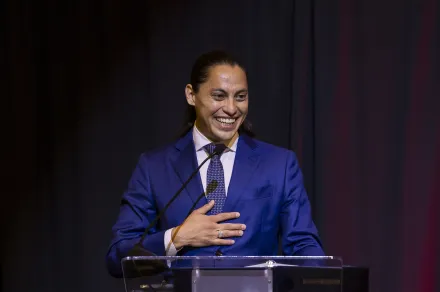
Last week, IAALS gathered with partners and friends for our 15th Annual Rebuilding Justice Award Dinner, celebrating the year’s awardees and recognizing our collective efforts to build a more inclusive justice system.
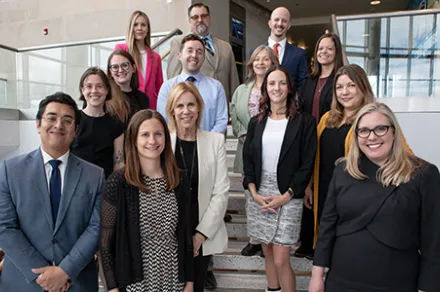
IAALS’ Lawyers Council is a new national group of law firms and businesses, whose members engage in IAALS’ process while also providing insight into their experiences in the justice system to inform our work.
Over the course of its history, IAALS has sparked undeniable momentum to change the status quo. Read more about our work to reshape our justice system in our 2022 Annual Report.
The ninth State of State Courts survey of one thousand registered voters gauged levels of public trust and confidence in our judiciary and broader institutions, with results revealing a decline across the board.
IAALS has released a landscape report along with an accompanying online Knowledge Center that offer a compilation and comparison of existing programs nationwide for establishing new tiers of legal professionals who can provide legal services to the public.
This November, thousands of judges across 38 states find themselves on the ballot, and there is reason to believe that this year judicial races will capture more voter attention than usual.