


Civil Justice Initiative

From recommendations to reform
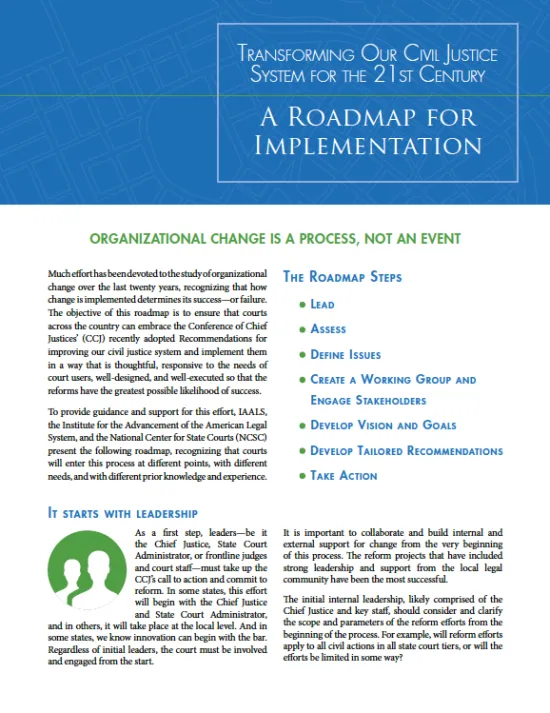
To ensure that the 13 Civil Justice Initiative recommendations achieve their important goals, IAALS and the NCSC—with support from the State Justice Institute—have focused on implementation of the recommendations around the country. Through the Civil Justice Initiative (CJI) Implementation Plan, under the direction of the CJI Steering Committee, IAALS and the NCSC provided education, technical assistance, and practical tools to help state courts implement the Recommendations nationwide.
Additional Resources:
- Assessing Areas for Impact in Civil Justice Reform: A Questionnaire for State Courts provides a structured self-assessment tool to help court leaders highlight areas within their civil justice system in need of reform as well as potential implementation barriers.
- Performance Measures for Civil Justice provides a description of common metrics and methods for assessing the effectiveness of existing and newly implemented civil justice rules and business practices.
A key aspect of the project included a series of state court regional planning meetings—regional Summits—where states learned about the impact of civil justice reforms and effective implementation strategies. We encouraged every state at the regional Summits to learn about civil justice reform efforts nationwide and provided each state with an opportunity to develop an action plan for reform or other activities in their respective jurisdictions. Finally, this implementation effort also included demonstration projects, education, and technical assistance.
IAALS continues to work with state courts around the country to provide expert assistance and support as they implement these Recommendations. With the NCSC and support from the State Justice Institute, IAALS continues to work with Texas to implement the reform recommendations developed by the Texas Civil Justice Committee. As part of this effort, we conduct virtual judicial training on the revisions to the Expedited Actions Rules and roles and best practices for civil case management teams (CCMTs).
Other Implementation Materials:
IAALS has developed additional tools to support states’ implementation efforts:
- Guidelines for Creating Effective Self-Help Information details recommendations to help courts increase the effectiveness of existing self-help materials and assist in the development of new materials that empower people with information and an understanding of what to do with that information on their journey through the legal process.
- Ensuring the Right to Be Heard: Guidance for Trial Judges in Cases Involving Self-Represented Litigants provides recommendations for helping trial judges better manage cases involving self-represented litigants, with the ultimate goal of better service to court users.
NCSC has developed additional tools to support states’ implementation efforts:
- Assessing Areas for Impact in Civil Justice Reform: A Questionnaire for State Courts
- Criteria for Automating Pathway Triage in Civil Case Processing
- Triage Implementation Blueprint
- A Guide to Building Civil Case Management Teams
- Reimagining Civil Case Management
- Map resource with states that have enacted statutes, court rules, or other positive law that explicitly address consumer debt collection litigation