News & Updates

List of news articles

Showing 781 - 800 out of 2125 results

  • Guest Blog

    ETL Ignite: Preliminary Outcomes of an Innovation Curriculum

    In this short presentation from October’s Educating Tomorrow’s Lawyers Conference, I talk about preliminary outcomes of Suffolk’s innovation curriculum. The innovation curriculum consists of courses in legal technology, practice management, and the delivery of legal services that form the basis of Suffolk’s concentration in legal technology and innovation and Accelerator to Practice Program. I

    1
  • Guest Blog

    ETL Ignite: Collaborating for Transfer

    At Seattle University School of Law, our goal is to have a comprehensive, integrated skills curriculum. We feel good about our curriculum’s comprehensiveness; we have focused in recent years on integration. Our legal writing and clinical faculty in particular have collaborated extensively over the last several years, including holding a yearly joint retreat. We also collaborate on the Real Clients in the First Year Project, where our first-year legal writing students work on a slice of a pending clinical case or on a live issue from a legal nonprofit. 

    1
  • ETL Ignites: Technology, Assessments, and First Year Law School Ethics

    Throughout this month, we've been releasing the fantastic Ignite-style presentations given at our 4th Annual Educating Tomorrow’s Lawyers Conference by ETL Fellows and faculty from across the ETL Consortium. Faculty discussed an array of issues, from the innovations and outcomes of their school’s classes, programs, or curricula, to innovations within the realm of legal education more broadly.

    1
  • Guest Blog

    ETL Ignite: Dickinson Law’s New Curriculum and its Focus on Student Outcomes

    In this Ignite talk from the 2015 ETL Conference, we talk about the new Problem Solving I course, which is a required course, taught during the 1L Fall Semester. This course introduces students to a standard problem-solving methodology that they can use in a variety of settings, including transactional, litigation, and governmental. This course also stresses the importance of fact gathering. Students participate in five simulations, including an interview each student conducts during the second week of law school.

    1
  • Expert Opinion

    Applying—and Achieving—Proportionality

    Just a week ago, the long awaited amendments to the Federal Rules of Civil Procedure went into effect. Of the amendments, the most significant—and controversial—changes are to Rule 26, which specifically incorporates proportionality into the scope of discovery.

    1
  • NCSC Report on the Landscape of Civil Litigation Informs CCJ Committee Efforts

    Recently, IAALS Executive Director Rebecca Love Kourlis and I met with the other members and staff of the Conference of Chief Justices Civil Justice Improvements Committee for its fourth plenary meeting in Washington, D.C. The committee is evaluating civil justice improvement efforts around the country and developing guidelines and best practices for civil litigation, as well as caseflow management.

    1
  • The Center for Out-of-Court Divorce: A Proven, Community-Centered Alternative for Families

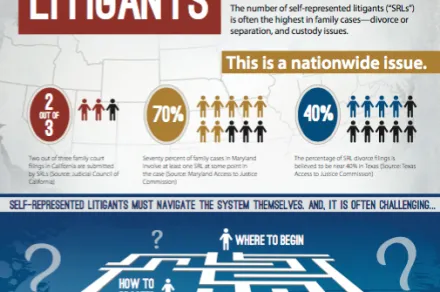
    So often when parents begin the process of separation and divorce they feel vulnerable and uncertain about how to proceed. Their greatest fear is the potential of harm to their children. The Center for Out of Court Divorce – Denver (COCD or Center) offers parents a proven way forward that is designed to reduce conflict, save time and money, and support the long term well-being of the family.

    1
  • Guest Blog

    ETL Ignite: Inclusive Strategic Planning and Faculty Adoption of Learning Outcomes

    On October 1, we came from Albany Law School to present on “How an Inclusive Strategic Planning Process Leads to Faculty Adoption of Institutional Student Learning Outcomes” at the 4th Annual Educating Tomorrow’s Lawyers Conference in Denver, Colorado. Albany Law’s process of developing learning outcomes began years ago with a conference hosted by Albany Law’s Center for Excellence in Law Teaching (CELT) on “Setting and Assessing Learning Objectives from Day One.” With the momentum and knowledge from the CELT conference and the development of the Albany Law Strategic Plan, which emphasized that “a competency-based curriculum ensures that students achieve the core knowledge and transferable skills necessary to succeed in a fast changing environment,”

    1
  • Beyond the Federal Rule Amendments

    As the legal world is focused on the newly implemented amendments to the Federal Rules of Civil Procedure, which went into effect December 1st, there is one group that is already thinking “what next?”—the Advisory Committee on Civil Rules. At the…

  • Guest Blog

    ETL Ignite: Assessing Learning Outcomes Piece by Piece

    At Denver Law, we are following the wisdom that counsels conducting assessment in small and discrete pieces. We will, each year, focus on parts of our JD program and assess learning in each using direct (student work product) and/or indirect (student self-reports) data. An example of the latter is our “Externship Program Professional Identity Formation Project.” At the start and upon completion of doing an Externship, Denver Law students rate themselves on ten items associated with professional identity and identity formation. From these responses, we compute a “Prof ID Formation Index” for each student, and we compare these measures before and after the Externship.

    1
  • Expert Opinion

    Long Awaited Amendments to the Federal Rules of Civil Procedure Go Into Effect

    Today, December 1, the long awaited amendments to the Federal Rules of Civil Procedure go into effect. The “package” of amendments include rule changes across a number of rules (specifically Rules 1, 4, 16, 26, 30, 31, 33, and 34) and focus on increasing cooperation, achieving proportionality in discovery, and encouraging early case management by judges.

    1
  • Press Release

    Sweeping Changes to Federal Rules of Civil Procedure Intended to Change Courts' Culture

    A wave of new amendments to the federal rules of civil procedure will take effect Tuesday, Dec. 1, sparking cultural and operational changes to the nation’s legal system. Approved last April by the U.S. Supreme Court, the amendments are intended to refocus the legal community on providing a just, speedy, and less expensive resolution in litigation for every case.

    1
  • Engaging the Family Bar to Shape a Better Justice System for Families

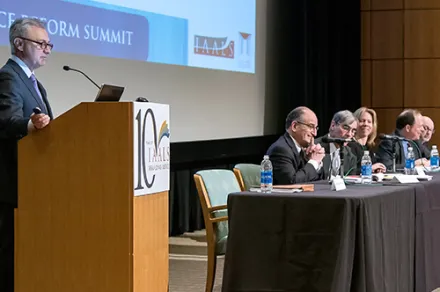
    Honoring Families recently convened a diverse cross-section of the national family law bar, with the goal of identifying and discussing improvements to the system that would allow all practitioners to better serve clients and children. The Family Bar Summit: Shaping the System for the Families We Serve challenged participants to shed preconceived notions about the system and engage in forward-thinking discussion on various aspects of the family justice system.

    1